 Save
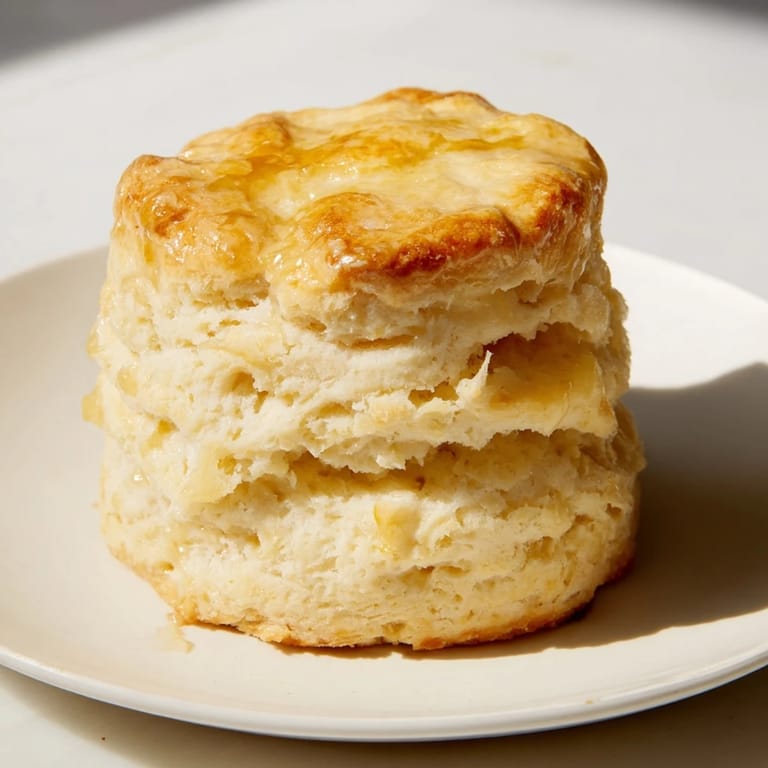
Save My grandmother kept a cast-iron skillet on her stovetop that had exactly one purpose: warming biscuits. Not baking them, just warming them. It wasn't until I moved into my own kitchen that I realized those perfect, towering biscuits she'd pull from the oven weren't magic—they were just cold butter, buttermilk, and the discipline to stop mixing before your hands got warm. The first batch I made sat on the cooling rack while I called her, and she laughed when I asked if they were supposed to be that tall. They were.
I made these for the first time on a Sunday morning when my roommate wandered into the kitchen asking what smelled like a bakery. Watching her face when she bit into one—that moment when you taste something still-warm and buttery and it changes your whole day—that's when I understood why my grandmother was so particular about the details.
Ingredients
- All-purpose flour, 2 cups: This is your structure, and room temperature matters less than the fact that you're not using anything fancy. Standard flour does the job beautifully.
- Baking powder, 1 tablespoon and baking soda, ½ teaspoon: These two work together to lift the biscuits tall, but don't mix them into the flour too early or they'll start working before you're ready.
- Fine sea salt, 1 teaspoon: This balances the butter and highlights the bread flavor without making them taste salty.
- Granulated sugar, 1 tablespoon: A small touch of sweetness that nobody will taste directly but everyone will notice is missing if you skip it.
- Unsalted butter, ½ cup, cold and cubed: This is the secret—cold butter creates steam pockets that become your layers. Room-temperature butter makes dense, sad biscuits.
- Cold buttermilk, ¾ cup, plus extra for brushing: The acidity tenderizes the dough while the liquid brings it together. Cold matters here too; warm buttermilk will melt your butter before you even start mixing.
Tired of Takeout? 🥡
Get 10 meals you can make faster than delivery arrives. Seriously.
One email. No spam. Unsubscribe anytime.
Instructions
- Get your oven ready:
- Set it to 425°F and let it come fully to temperature while you work. Line your baking sheet with parchment paper so the bottoms don't brown too fast.
- Mix the dry ingredients:
- Whisk flour, baking powder, baking soda, salt, and sugar together in a large bowl. This distributes the leavening evenly, which is the entire point of whisking instead of just stirring.
- Work in the cold butter:
- Add your cubed butter and use a pastry cutter, forks, or your fingertips to break it into the flour until it looks like coarse sand with some pea-sized pieces still visible. The goal is to coat the flour without melting the butter—work quickly and don't overthink it.
- Bring it together gently:
- Make a well in the center, pour in cold buttermilk, and stir with a fork until the dough just comes together. Overmixing develops gluten and makes tough biscuits; you want some flour still visible when you transfer it to your work surface.
- Fold for flakiness:
- Turn the dough onto a lightly floured surface and gently pat it into a rectangle about ½ inch thick. Fold it in half, pat it out again, and repeat this fold-and-pat motion three times total. This creates the layered structure that makes them flaky.
- Cut the biscuits:
- Pat the dough to a final thickness of 1 inch and cut circles with a 2½-inch cutter, pressing straight down without twisting. Twisting seals the edges and prevents them from rising properly. Gather scraps gently and cut more, working with a light hand.
- Ready them for the oven:
- Place biscuits close together on your prepared sheet and brush the tops lightly with buttermilk for that golden finish.
- Bake until golden:
- Bake for 13 to 15 minutes until they're tall and deeply golden on top. The bottoms will be lighter, and that's exactly right.
- Cool briefly before serving:
- Let them rest for a few minutes on the pan so they set up, then transfer to a plate or basket while they're still warm.
 Save
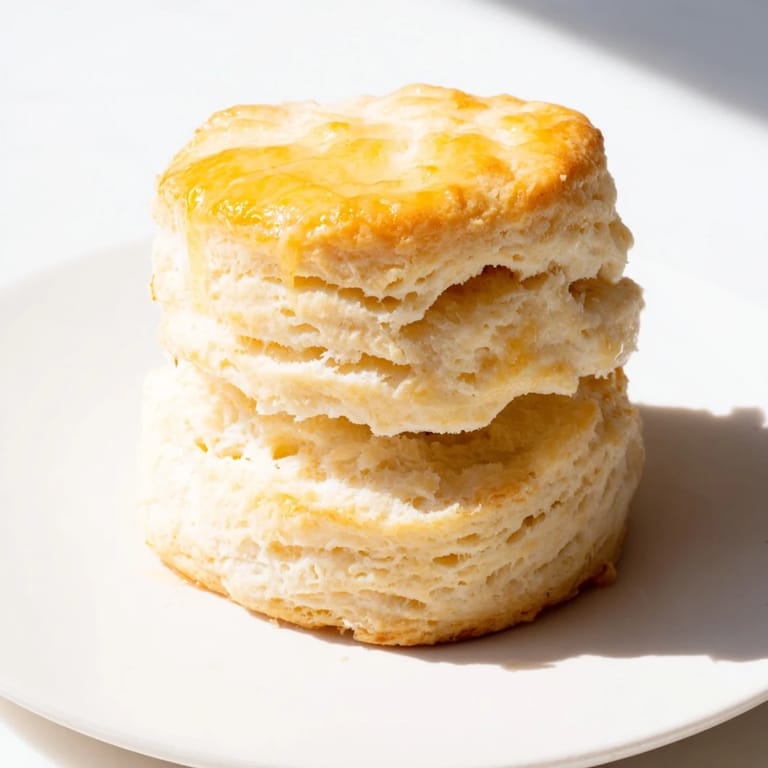
Save There's something almost ceremonial about pulling biscuits from the oven when they've risen exactly right. The smell fills your whole kitchen, and suddenly breakfast feels less like a task and more like something worth waking up for.
Why the Folding Matters
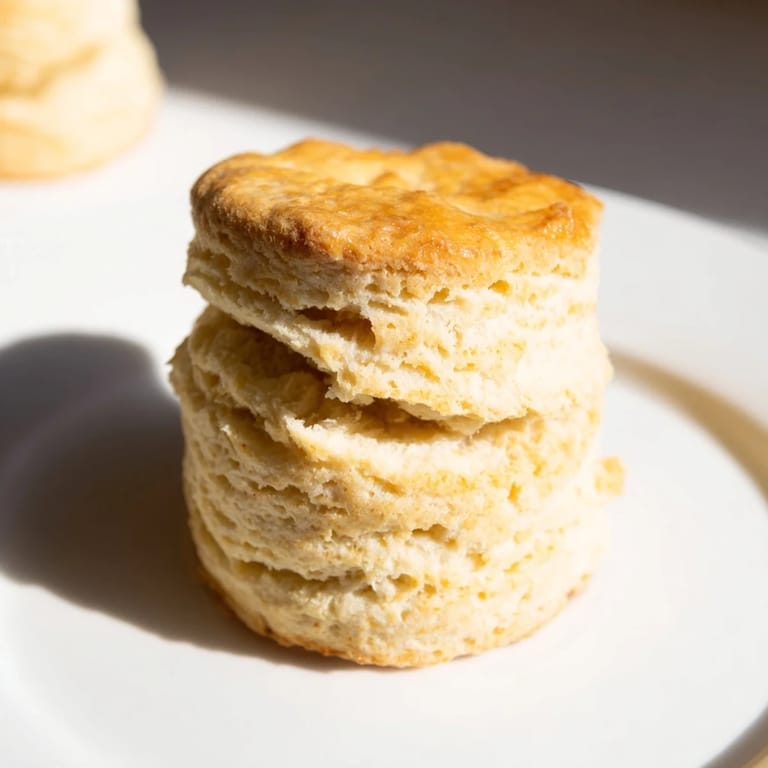
The fold-and-pat motion isn't just an extra step—it's what separates these from simple dinner rolls. Each fold creates a thin layer of butter surrounded by dough, and when the oven's heat hits it, the butter melts and creates steam that pushes the layers apart. This is why you can see actual flakes when you pull one open, and why they taste nothing like the dense, uniform crumb of a regular biscuit.
Buttermilk Isn't About Buttermilk
The name is misleading—buttermilk isn't actually buttery, it's tangy. The acidity reacts with the baking soda to create lift while also tenderizing the dough, which is why regular milk won't work the same way. If you're out of buttermilk, mix milk with lemon juice or vinegar and let it sit for five minutes before using. The science works the same; only the flavor shifts slightly.
Beyond Plain and Simple
Plain biscuits are perfect on their own, but they're also a canvas. Half a cup of sharp cheddar stirred into the dry ingredients makes something spectacular with eggs. Fresh herbs—chives, thyme, or rosemary—shift the mood entirely. A pinch of black pepper or a small handful of everything bagel seasoning turns breakfast into something you'll remember.
- Add cheese or herbs after whisking the dry ingredients so they're distributed evenly.
- If using herbs, chop them finely so they don't puncture the butter layers.
- Let yourself experiment without fear; the technique is solid enough to handle variations.
 Save
Save Once you make these a few times, you'll stop thinking about it as following instructions and start thinking about it as a ritual. That's when they become really yours.
Recipe FAQs
- → How do I achieve flaky layers in these biscuits?
Incorporate cold butter into the dry ingredients gently and fold the dough multiple times before cutting to create distinct flaky layers.
- → Can I substitute buttermilk if I don't have any?
Yes, mix ¾ cup milk with 2 teaspoons lemon juice or vinegar and let it sit for 5 minutes to mimic buttermilk’s acidity and texture.
- → What is the ideal oven temperature for baking these biscuits?
Preheat your oven to 220°C (425°F) to help the biscuits rise tall and develop a golden crust.
- → How can extra flavor be added to the dough?
Additions like grated cheddar, fresh herbs, or a pinch of black pepper can enhance the flavor without altering texture.
- → Should I twist the cutter when shaping biscuits?
No, press the cutter straight down without twisting to keep layered structure intact and help biscuits rise evenly.