 Save
Save There's something oddly satisfying about the moment you pull open the oven door and that wave of warm, herb-scented steam hits you—that's when I knew this simple chicken breast method was a keeper. My partner was skeptical that such straightforward seasoning could yield anything memorable, but watching them go back for seconds proved otherwise. It became our go-to when we needed dinner on the table without fuss or stress, yet still wanted something that felt intentional and flavorful.
I made this for a work potluck once, sliced it cold and tossed it into a salad with greens and vinaigrette, and had three people ask for the recipe before I'd even sat down. That's the kind of understated power this dish has—it doesn't shout, but it definitely shows up.
Ingredients
- Boneless, skinless chicken breasts (6–8 oz each): Four pieces ensure you have enough for a family or great leftovers, and this size cooks evenly without drying out at the edges.
- Olive oil: Two tablespoons creates a protective barrier and helps the spices stick, lending subtle richness without heaviness.
- Garlic powder: One teaspoon of this kitchen staple delivers concentrated flavor without the wetness of fresh garlic, which could make your seasoning paste slip right off.
- Onion powder: One teaspoon adds savory depth that round out the overall taste beautifully.
- Paprika (smoked or sweet): One teaspoon brings warmth and a hint of complexity—I lean toward smoked because it feels less one-note.
- Dried oregano or Italian seasoning: One teaspoon keeps things herbaceous without requiring you to chop fresh herbs if you're in a rush.
- Salt and black pepper: Half a teaspoon salt and a quarter teaspoon pepper are your final balancing act; taste as you go because every kitchen's air is different.
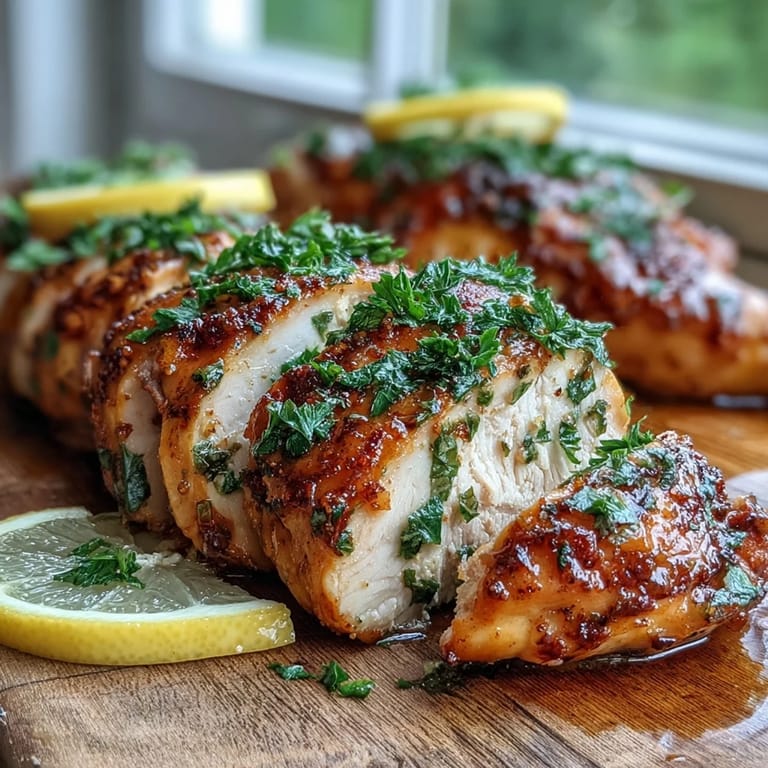
- Lemon slices and fresh parsley (optional): These finish the plate with brightness and color, turning a simple dinner into something that looks intentional.
- Simple Marinade (optional): Quarter cup olive oil, two tablespoons lemon juice, two tablespoons soy sauce, one tablespoon honey or maple syrup, one teaspoon Dijon mustard, minced garlic, and a quarter teaspoon black pepper let you marinate ahead if you're planning strategically.
Tired of Takeout? 🥡
Get 10 meals you can make faster than delivery arrives. Seriously.
One email. No spam. Unsubscribe anytime.
Instructions
- Heat your oven and prepare:
- Set your oven to 400°F and line your baking sheet with parchment paper—this prevents sticking and makes cleanup the easiest part of dinner. You're building momentum here, so everything feels like it's flowing smoothly.
- Dry and pound the chicken:
- Pat each breast dry with paper towels, then place between two sheets of plastic wrap and gently pound to about three-quarters of an inch thickness using a meat mallet or even a rolling pin. This step matters because even thickness means even cooking, so no overcooked edges while the center is still learning how to be done.
- Mix your seasoning blend:
- Combine the olive oil, garlic powder, onion powder, paprika, oregano, salt, and pepper in a small bowl, stirring until you have a cohesive paste. This is easier than trying to sprinkle five different spices and watch them slide right off the chicken.
- Coat the chicken:
- Rub the seasoning mixture generously over both sides of each breast, using your fingers to make sure every inch gets touched. If you're feeling fancy and have time, marinate in the simple marinade for thirty minutes to two hours in the fridge, then pat dry before proceeding—but honestly, the quick version works beautifully too.
- Arrange and space:
- Lay each breast on the prepared sheet in a single layer, making sure they're not touching or crowded. Chicken respects personal space, and so should you if you want golden, evenly cooked results.
- Bake until perfect:
- Slide into the oven for eighteen to twenty-two minutes, checking the thickest part with an instant-read thermometer—you're aiming for exactly 165°F. This is when you resist the urge to peek constantly and instead trust the process.
- Rest and finish:
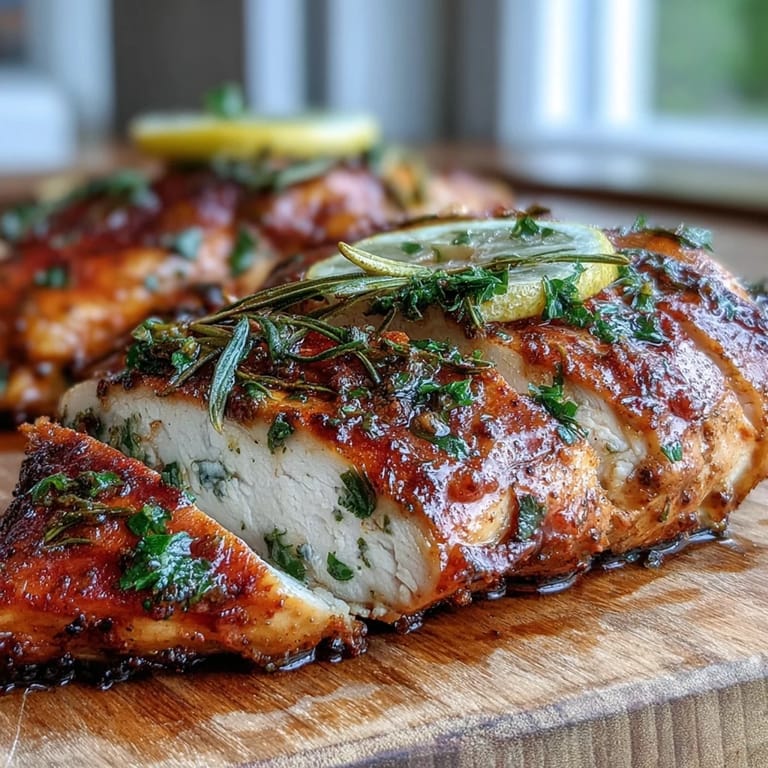
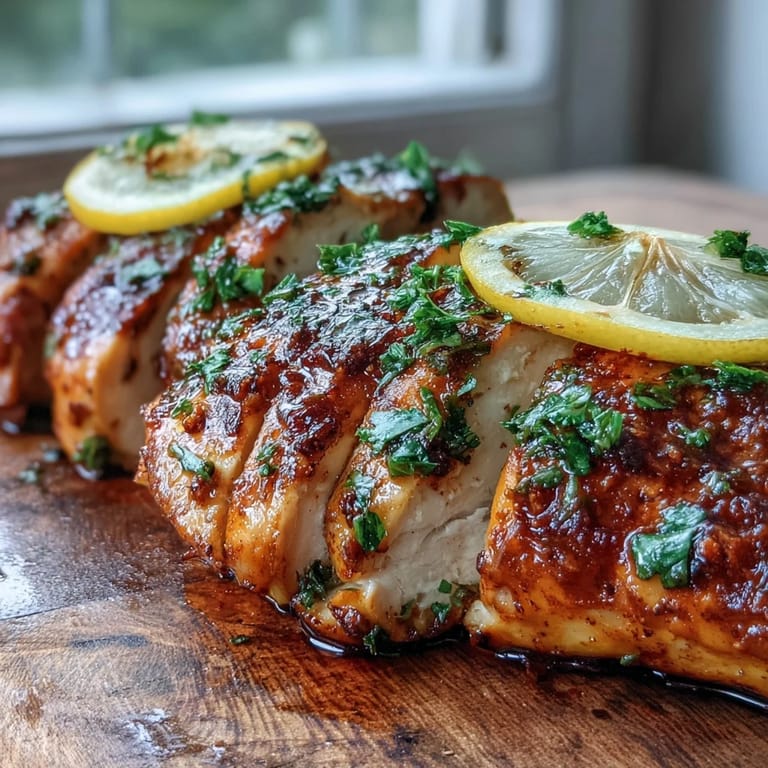
- Let the chicken sit for five minutes out of the oven before slicing, which keeps all those lovely juices from escaping the moment you cut into it. Garnish with lemon slices and fresh parsley if you'd like, then serve while everything's still warm.
 Save
Save I brought this to a potluck where someone had made their grandmother's famous chicken recipe, and mine held its own beside it—not through fanciness, but through honest, clean flavors that let the chicken itself be the star. That taught me something important about cooking: sometimes restraint and technique matter more than complexity.
Why This Method Stays in Rotation
This isn't a recipe that asks you to do anything fancy or spend an afternoon sourcing unusual ingredients. It's the kind of cooking that respects your time and your hunger, delivering something that tastes like you actually cared without requiring you to prove anything. The seasoning blend is straightforward enough that you'll memorize it after two tries, and the technique is forgiving enough that beginners and confident cooks alike end up with the same good result.
Building Flavor Without Overthinking
The magic here is that each spice has a job—garlic and onion powder create the savory base, paprika adds warmth and color, oregano brings herbaceous balance, and salt and pepper tie everything together. You're not layering ten competing flavors; you're creating one cohesive taste that makes people ask, simply, for more. I learned this after years of trying to cram too much personality into chicken, only to discover that sometimes less really does taste better.
Making It Work for Your Kitchen
This recipe scales beautifully whether you're feeding two people or eight, and the seasoning ratio stays exactly the same—just multiply everything by the number of breasts you're cooking. I've done this on weeknight evenings with kids underfoot, on quiet Sundays with a glass of wine, and even right before work when I needed protein prepped for the week ahead. The consistency is comforting, and the results are always reliable.
- For extra spice, sprinkle in a pinch of cayenne or red pepper flakes right before baking.
- If you prefer juicier meat, swap chicken thighs in and add five to seven minutes to the baking time.
- Cold leftovers are spectacular sliced into salads or stacked between bread with your favorite fixings.
 Save
Save This recipe taught me that sometimes the best dishes aren't the ones that demand your attention, but the ones that free you up to actually enjoy eating and spending time with whoever's sitting across from your table. Make this chicken tonight.
Recipe FAQs
- → How do I keep chicken breasts from drying out?
Pound the chicken to even thickness (about ¾ inch) before cooking. This ensures uniform heat distribution. Bake at 400°F until the internal temperature reaches 165°F, then let the meat rest for 5 minutes to allow juices to redistribute throughout the meat.
- → What temperature should baked chicken be?
Chicken breasts should be baked at 400°F (200°C) and cooked until an instant-read thermometer inserted into the thickest part reads 165°F (74°C). This typically takes 18–22 minutes depending on thickness.
- → Can I use chicken thighs instead?
Yes, boneless skinless chicken thighs work wonderfully and tend to be more forgiving and juicy. Increase the baking time by 5–7 minutes, or until the internal temperature reaches 165°F.
- → How long does cooked chicken keep in the refrigerator?
Store cooled chicken in airtight containers in the refrigerator for up to 4 days. The seasoned flavor develops over time, making it excellent for meal prep. Reheat gently to maintain moisture.
- → What can I serve with baked chicken breast?
Slice and serve over salads, stuff into sandwiches, or pair with roasted vegetables, rice, quinoa, or potatoes. The mild seasoned flavor pairs well with almost any side dish or sauce.
- → Should I cover chicken while baking?
No, bake uncovered to allow the exterior to develop slight browning and a seasoned texture. Covering would trap steam and prevent the chicken from developing any color or texture.