 Save
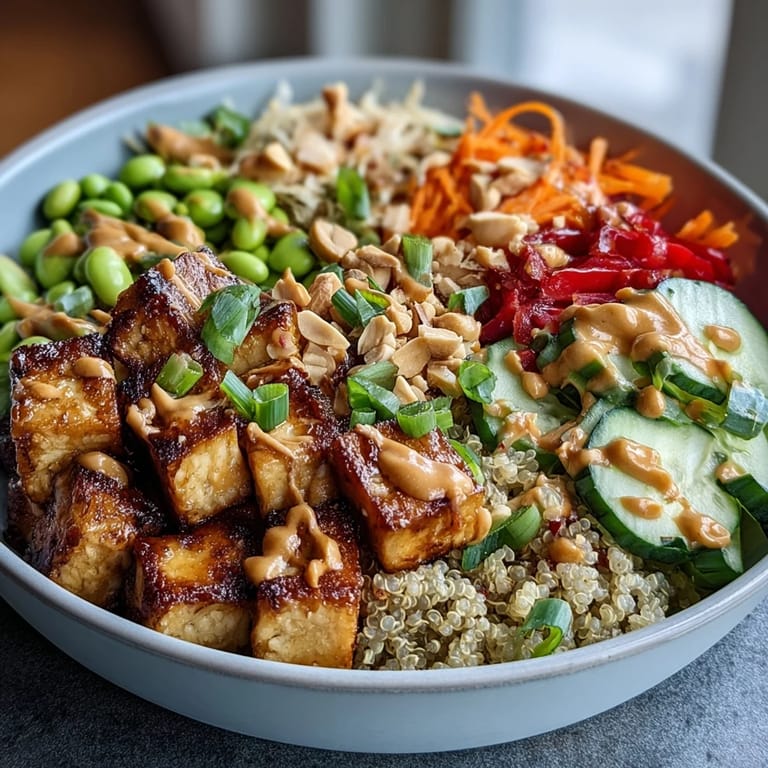
Save There's something about assembling a bowl that feels like creating art on a plate. I stumbled onto this peanut tofu power bowl during a phase when I was determined to prove that plant-based eating could be exciting, not restrictive. The moment I drizzled that silky peanut sauce over the crispy tofu and watched it pool into all the colorful vegetables, I realized I'd found something special—a meal that tastes indulgent but leaves you feeling genuinely nourished.
I made this for my friend who'd just gone vegan, and I'll never forget how she paused mid-bite to ask, "Wait, is this even vegan?" in a tone of genuine shock. She kept coming back to that peanut sauce, swirling it around like she was trying to decode the magic. That's when I knew this bowl had legs—it converts skeptics and becomes a favorite.
Ingredients
- Extra-firm tofu (400 g): Press it thoroughly between paper towels for at least 15 minutes; this step isn't optional if you want crispiness rather than mushiness.
- Cornstarch (2 tbsp): The unsung hero that creates a light, crispy coating without deep frying.
- Brown rice or quinoa (200 g uncooked): Brown rice takes about 45 minutes, quinoa closer to 15, so plan accordingly.
- Vegetables (carrots, bell pepper, cabbage, edamame, cucumber, spring onions): Buy pre-shredded or julienned if time is tight; this isn't where your energy needs to go.
- Creamy peanut butter (60 g): Use natural or conventional, but make sure it's smooth—chunky versions can make the sauce gritty.
- Soy sauce or tamari (2 tbsp): Tamari is your friend if gluten matters in your kitchen; the flavor is nearly identical.
- Rice vinegar or lime juice (1 tbsp): This brightens everything; don't skip it thinking the sauce will taste fine without it.
- Toasted sesame oil (1 tsp): A little goes a long way; regular sesame oil lacks the roasted depth you need here.
- Garlic and ginger (minced and grated): Fresh is non-negotiable; jarred versions taste stale by comparison.
- Maple syrup or agave (1 tbsp): Balances the saltiness and adds a subtle sweetness that makes the sauce craveable.
Tired of Takeout? 🥡
Get 10 meals you can make faster than delivery arrives. Seriously.
One email. No spam. Unsubscribe anytime.
Instructions
- Get Your Grains Started:
- Start your rice or quinoa first since they take the longest—this is your foundation. Follow package instructions, fluff it gently with a fork when done, and set it aside so it stays warm but not mushy.
- Press and Cube the Tofu:
- Unwrap your tofu, drain any liquid, and press it between paper towels with something heavy on top for 15 minutes. Once pressed, cube it into roughly 3/4-inch pieces so they cook evenly.
- Coat and Crisp the Tofu:
- Toss your tofu cubes with cornstarch and salt until every piece is lightly coated—this is what creates that golden, crispy exterior. Either spread them on a baking sheet and bake at 200°C (400°F) for 20–25 minutes, flipping halfway, or pan-fry them in a hot skillet with olive oil until browned on all sides.
- Whisk Your Sauce Together:
- While the tofu cooks, combine peanut butter, soy sauce, maple syrup, rice vinegar, sesame oil, minced garlic, grated ginger, and water in a bowl. Whisk until smooth and creamy, adding more water a tablespoon at a time if it feels too thick.
- Prep Your Vegetables:
- Julienne the carrots, slice the bell pepper and cucumber, shred the cabbage, and slice the spring onions. If using frozen edamame, steam them quickly and shell them while everything else finishes cooking.
- Assemble Your Bowl:
- Divide the warm rice or quinoa among four bowls, then arrange the crispy tofu and all your colorful vegetables on top in little sections. Pour the peanut sauce generously over everything, letting it pool into the grain.
- Garnish and Serve:
- Top with chopped roasted peanuts, sesame seeds, and fresh cilantro or mint if you have it. Serve immediately while the tofu is still warm and the sauce is at its best.
 Save
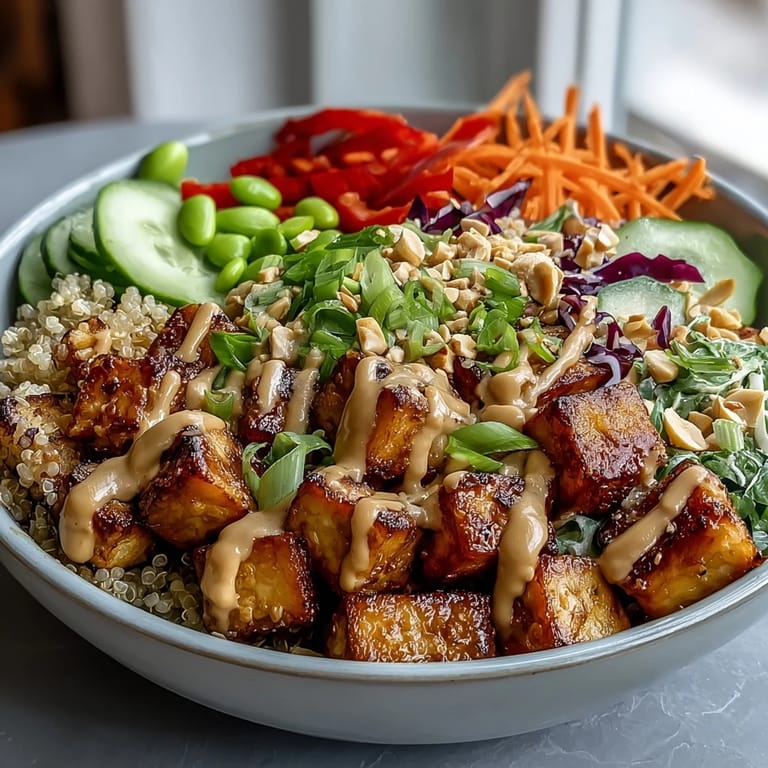
Save There's a quiet joy in watching someone eat this bowl for the first time—the way their spoon naturally breaks the yolk-like crispiness of the tofu, how they pause to take in the texture contrast between the grain, the vegetables, and that creamy sauce. It stopped being just dinner for me and became something I make when I want to feed someone well.
Why This Bowl Became My Go-To
I used to think plant-based meals required apology or explanation, but this bowl changed that mindset completely. The combinations feel intentional and sophisticated, not like I'm settling for vegetables because I have to. Every element—the earthiness of the grain, the snap of fresh vegetables, the richness of the sauce—plays a role that matters.
Making It Work for Your Life
The beauty of this recipe is that it bends to your schedule and preferences. Cook your grains the night before, and assembly becomes a five-minute task in the morning. The sauce keeps for three days in the fridge, so make a double batch and use it on salads, roasted vegetables, or as a dipping sauce for spring rolls throughout the week. Even the vegetable choices are flexible—swap whatever's in season or on sale for what the recipe calls for, and the bowl remains just as delicious.
Variations and Additions That Work
I've learned through experimentation what elevates this bowl from good to craveable. Sometimes I roast sweet potato cubes alongside the tofu for added sweetness and nutrition. Other times I use cauliflower rice as the base when I'm keeping carbs lower, and the sauce clings to it beautifully. Avocado isn't essential, but it adds a creamy richness that makes the meal feel more indulgent without adding complexity to the cooking process.
- Try sriracha or extra chili flakes if you want heat: Start with a small amount and taste as you go, because these things build quickly.
- Roasted broccoli or steamed bok choy add substance without changing the flavor profile: These work particularly well if someone at your table prefers more traditional cooked vegetables.
- Don't skip the sesame seeds and fresh herbs—they're the final touch that transforms the bowl from complete to memorable.
 Save
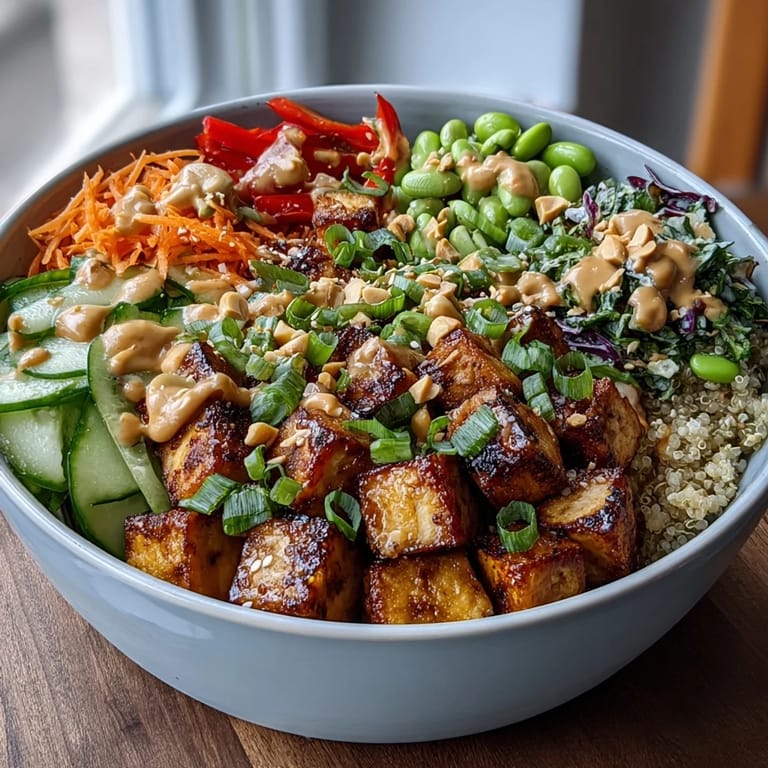
Save This bowl has become my answer to the question of how to eat well when life is busy—it's nourishing without being fussy, impressive without being complicated. Make it once and it becomes part of your regular rotation.
Recipe FAQs
- → How can I make the tofu extra crispy?
Coat tofu cubes evenly with cornstarch and bake in a preheated oven at 200°C (400°F) until golden and crisp, flipping halfway through. Alternatively, pan-fry them over medium-high heat for a crispy exterior.
- → Can I substitute grains in the bowl?
Yes, either brown rice or quinoa works well. For a lower-carb option, cauliflower rice can be used as a nutritious alternative.
- → What can I add to the peanut sauce for heat?
Add chili flakes or a dash of sriracha to the peanut sauce to introduce a spicy kick that complements the creamy texture and flavors.
- → Are there vegan and gluten-free considerations?
Using tamari instead of regular soy sauce ensures a gluten-free version. The entire bowl is plant-based and suitable for a vegan diet.
- → What toppings enhance the dish’s texture and flavor?
Roasted peanuts and sesame seeds add crunch, while fresh cilantro or mint leaves bring a refreshing aroma and taste to the bowl.
- → How should I prepare the vegetables?
Julienne or thinly slice fresh vegetables like carrot, bell pepper, cucumber, and spring onions. Steam edamame before adding to the bowl for tenderness.