 Save
Save The first time I made dandelion jelly, my kitchen windows were wide open and the scent of grassy spring air mingled with sweet floral notes as I plucked petals from a basket. It was a sunny morning, and the process felt almost meditative—each soft yellow tuft promising something bright and unexpected. My neighbor popped in, curious about the gold-tinged petals scattered across the table, sparking a conversation about edible flowers and old traditions. Even though I’d never imagined dandelions could turn into something so tasty, the experiment brought a playful energy to my routine. By sunset, the infusion steeped quietly overnight, reminding me that good things often unfold in slow, gentle stages.
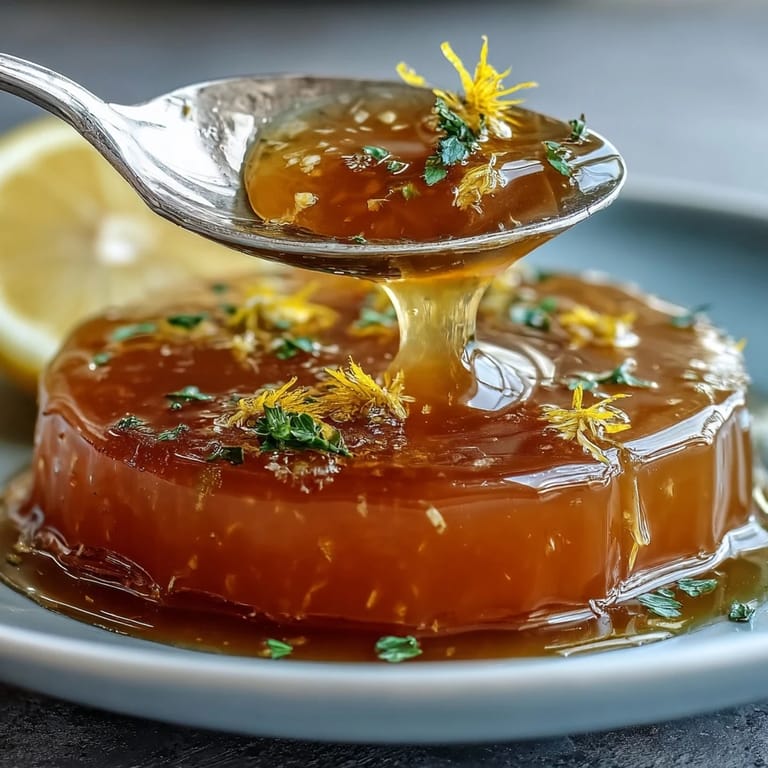
One spring I brought a jar of dandelion jelly to our picnic in the park, and watched friends smear it onto warm bread with wide-eyed delight. The sound of laughter and the splash of sunlight on the blanket made the moment unforgettable. Someone asked if it was apricot, sparking our group’s guessing game before I revealed its secret foraged origins. Sharing the golden jars became a ritual at gatherings, always greeted with eager curiosity and smiles. The jelly often became the star of a brunch table, paired with freshly baked scones.
Ingredients
- Fresh dandelion petals: Removing every trace of green is crucial so your jelly tastes floral and bright, not bitter—patience pays here.
- Water: I always use filtered if possible to highlight the delicate flavor, especially for wild ingredients.
- Fresh lemon juice: A squeeze from a vibrant lemon balances the sweetness and lifts the floral undertones beautifully.
- Granulated sugar: Provides structure and preserves the color—you’ll notice everything thickens just right.
- Mild honey: I like choosing a light local honey, which adds a gentle warmth and extra complexity.
- Fruit pectin: Reliable setting agent; stirring it in smoothly avoids clumps or uneven texture.
Tired of Takeout? 🥡
Get 10 meals you can make faster than delivery arrives. Seriously.
One email. No spam. Unsubscribe anytime.
Instructions
- Gather and prep petals:
- Gently pinch off just the yellow petals, leaving any green bits behind so the finished jelly tastes mellow, not grassy.
- Make the infusion:
- Combine petals and water in your largest saucepan, and once the mixture simmers, let the steam carry a wildflower scent through your kitchen.
- Let flavors bloom overnight:
- Cover and steep for at least six hours—watch how the color deepens and imagine the jar as a liquid sunset.
- Strain and measure:
- Pour through cheesecloth or a mesh sieve, pressing lightly to squeeze every drop—discard petals and be sure to reach three cups of liquid, topping off with water if needed.
- Mix and cook:
- Bring the liquid back to a boil with lemon juice and pectin, stirring constantly as bubbles grow wild and frothy.
- Add sweetness:
- Pour in sugar and honey, then stir until a fragrant, golden syrup forms—let it boil hard for a couple of minutes as you test for the perfect jelly set.
- Finishing touches:
- Skim off any foam, then carefully ladle into warm, sterilized jars, leaving just a little headspace so seals form tight.
- Process jars:
- Seal and process in a bubbling water bath; the rhythm of the lid clicks and steam signals you’re nearly done.
- Cool and check:
- Let jars rest undisturbed overnight—hearing the pop of a tight seal always feels like victory.
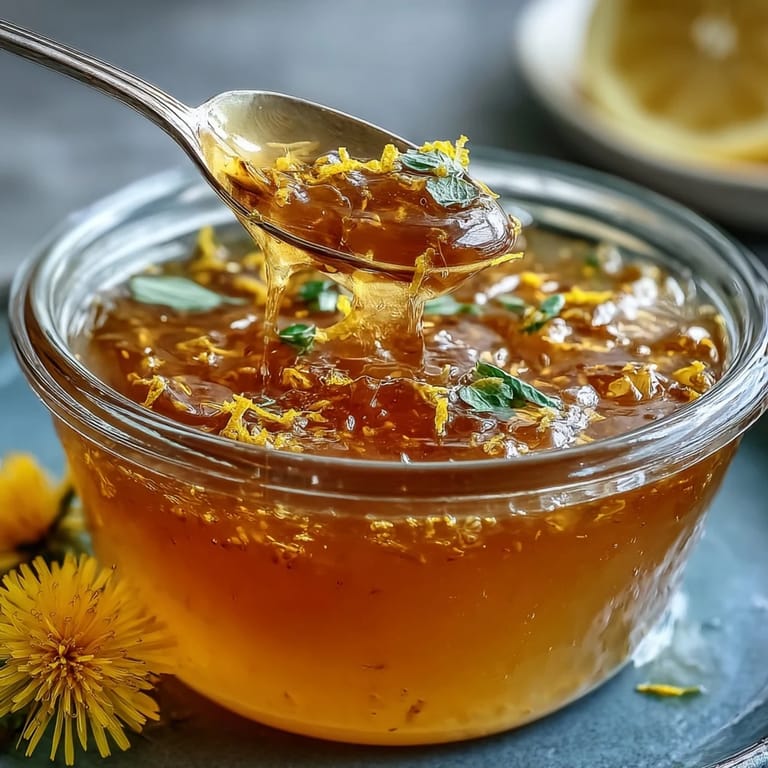 Save
Save When I gifted a jar to my aunt, she hesitated at first, then smiled after the first taste, saying it reminded her of a honeyed meadow. Sometimes food bridges gaps between generations, and the dandelion jelly brought unexpected warmth to our regular Sunday tea. It stopped being just a preserve and instead became a centerpiece for laughter and little stories. Those golden jars brightened rainy days and cheered up even the most ordinary toast. Its novelty sparked conversations no other spread could, cementing it as something special on our family table.
How Foraging Changes the Recipe
Harvesting dandelions made me realize how much flavor depends on location and freshness. Plucking petals early in the day, before the sun dries them out, delivers a more fragrant base for your jelly. Picking only from untreated lawns ensures you get purer flavor and keeps the recipe safe. I sometimes enlisted a helper, turning the task into a gentle walk and a small adventure. Each batch tastes subtly different depending on mood, weather, and the field you pick from.
Making the Jelly Truly Your Own
Experimenting with a splash of vanilla or using orange zest instead of lemon gave the jelly a twist—each variation was met with surprise at breakfast. Don’t be afraid to adjust sweetness or try swapping honey for agave if you want a vegan jar, just monitor for consistency. Mixing in wildflower honey changes the flavor profile, so play around with what’s local and available. Sometimes, adding a tiny pinch of salt helped heighten the floral notes. Every batch brings something new, from color to aroma.
Troubleshooting and Storage Tips
Cloudy jelly happened when I pressed the petals too firmly while straining, but it always tasted fine. If your set isn’t perfect, return it to the pot with a bit more pectin and re-boil for a minute. Well-sealed jars keep their golden glow for months in a cool, dark cupboard; I label the lids with the date for peace of mind. Taste evolves a little over time, getting more mellow and honeyed with age.
- Always sterilize jars thoroughly before filling to avoid spoilage.
- If your jelly develops crystals, gently reheat it and stir until dissolved.
- For gifting, wrap jars in a little twine and tuck a note about its wild origins.
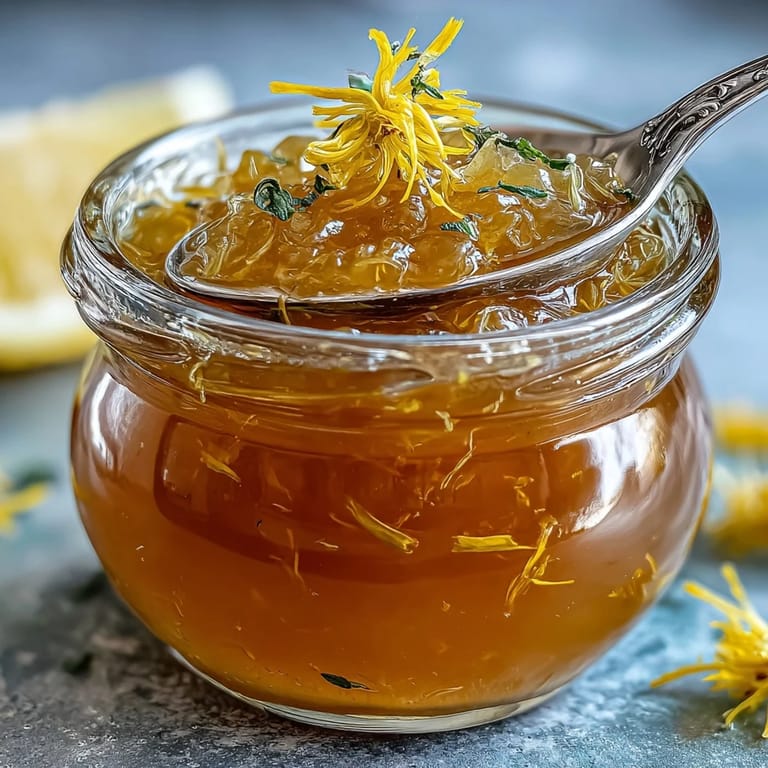 Save
Save This jelly brings sunlight to your kitchen on cloudy days and invites curiosity at every table. Keep a jar handy—someone will always ask about the story behind its golden sparkle.
Recipe FAQs
- → How do I safely harvest dandelion petals?
Pick dandelions from untreated areas, avoiding pesticides. Remove all green parts to prevent bitterness.
- → Can I use a vegan sweetener instead of honey?
Yes, replace honey with an equal amount of sugar or agave syrup for a vegan option.
- → How do I know when the jelly is set?
Use the jelly test: Place a spoonful on a cold plate and gently push. Wrinkling indicates it's ready.
- → What equipment do I need for this process?
A large saucepan, fine sieve, measuring tools, sterilized jars, ladle, and water bath canner are recommended.
- → What are some serving suggestions?
Enjoy it on toast, paired with soft cheeses, drizzled over yogurt, or as a glaze for roasted dishes.
- → Can I add other flavors?
Adding a teaspoon of vanilla extract creates a floral twist; experiment with your favorite herbs or citrus.