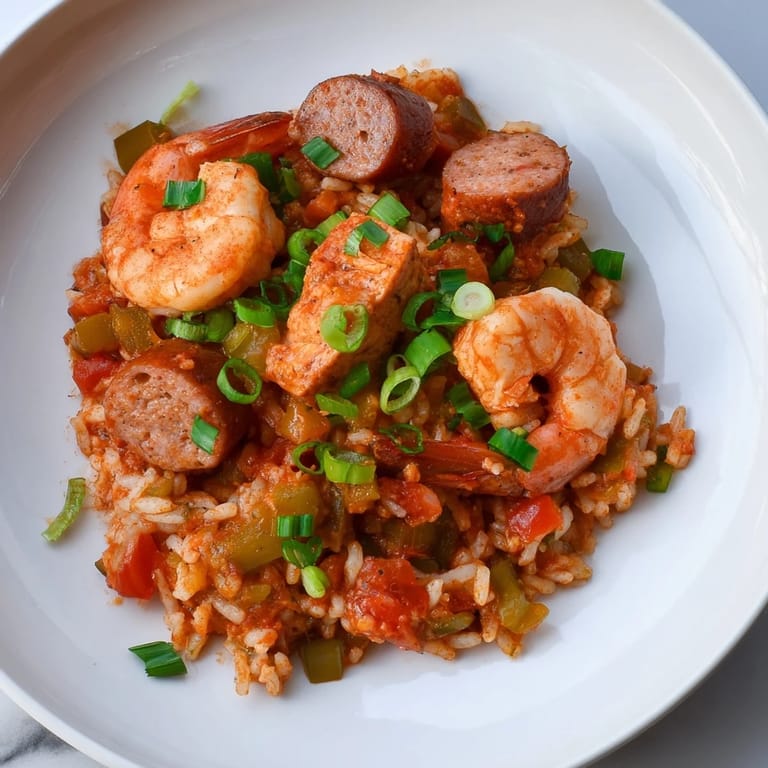
 Save
Save My first jambalaya came together on a humid Saturday afternoon when my neighbor Marcus brought over a bottle of hot sauce and insisted I learn to make his family's version. I'd avoided the dish for years, intimidated by all those components cooking at once, but watching him toss spices into the pot with such casual confidence made it seem almost simple. That first bite—the smoke from the sausage mingling with the brightness of tomatoes and the pop of shrimp—changed something in my kitchen philosophy. I realized that one-pot meals could actually taste like someone had been stirring magic for hours.
I made this for a dinner party once when I was nervous about feeding six people something ambitious, and I've never forgotten how everyone's conversation quieted for those first few bites. Someone asked for the recipe, then someone else did, and suddenly I wasn't the anxious host anymore—I was the person who made jambalaya. That shift, from doubt to pride over a single meal, is why I keep coming back to this recipe.
Ingredients
- Andouille sausage (225 g): Smoked and already seasoned, it does half the flavor work before you add any spices—use the best you can find because its quality really shows.
- Chicken thighs (250 g): Thighs stay juicy where breast would dry out, and they have more flavor; don't skip this swap if a recipe suggests chicken breast.
- Large shrimp (225 g): Add these late so they don't overcook and turn rubbery—they'll cook through in just minutes.
- Onion, bell pepper, and celery: The holy trinity of Southern cooking, and their sweetness balances the heat from the spices.
- Garlic (3 cloves): Mince it fine so it distributes throughout the dish and doesn't leave harsh chunks.
- Diced tomatoes (1 can, 400 g): The acidity brightens everything; canned works better here than fresh because of the juice.
- Long-grain white rice (300 g): Rinsing removes excess starch so grains stay separate and the pot doesn't turn into risotto.
- Chicken broth (720 ml): Use a good quality broth—it becomes the soul of the dish since it simmers everything together.
- Smoked paprika (1½ tsp): This is what gives jambalaya its signature warmth; regular paprika won't deliver the same depth.
- Dried thyme, oregano (1 tsp each): Bay leaves are included but these dried herbs build the base; fresh won't have the same concentrated punch.
- Cayenne pepper (1 tsp): Start here and adjust up if you like heat, but remember it keeps building as it simmers.
- Vegetable oil (2 tbsp): You need enough to brown the proteins and cook the vegetables without the pot becoming an oil slick.
Tired of Takeout? 🥡
Get 10 meals you can make faster than delivery arrives. Seriously.
One email. No spam. Unsubscribe anytime.
Instructions
- Brown the sausage first:
- Heat 1 tablespoon oil over medium-high heat in your pot and let the sausage release its smoke and fat; this takes about 3–4 minutes and the smell will tell you when it's right. Remove it and set aside because it'll cook more later.
- Add and brown the chicken:
- Use the remaining oil and season the chicken pieces lightly before they hit the hot pot; they need 4–5 minutes to develop a light golden crust on all sides. Don't crowd the pot or they'll steam instead of brown.
- Build the flavor base:
- Sauté the onion, bell pepper, and celery for about 5 minutes until they soften and become translucent, then add the garlic for just 1 minute more so it doesn't burn. This is where the sweetness starts developing.
- Toast the spices:
- Add the rice and all the dry spices, stirring constantly for about 1 minute to wake up their flavors before adding liquid. You'll smell everything come alive.
- Add liquid and reunite:
- Pour in the tomatoes (juice and all) and broth, scrape up the brown bits stuck to the pot—that's concentrated flavor you don't want to waste. Return the sausage and chicken, stir well, and bring to a boil.
- Simmer gently:
- Reduce heat to low, cover the pot, and let it bubble quietly for 20 minutes, stirring once halfway through so nothing sticks to the bottom. This is the part where you can take a breath and not worry.
- Add the shrimp:
- Nestle the raw shrimp into the rice, cover again, and cook for 5–7 minutes until they turn pink and the rice is fully tender. If you overcook this step, shrimp becomes rubbery.
- Finish with care:
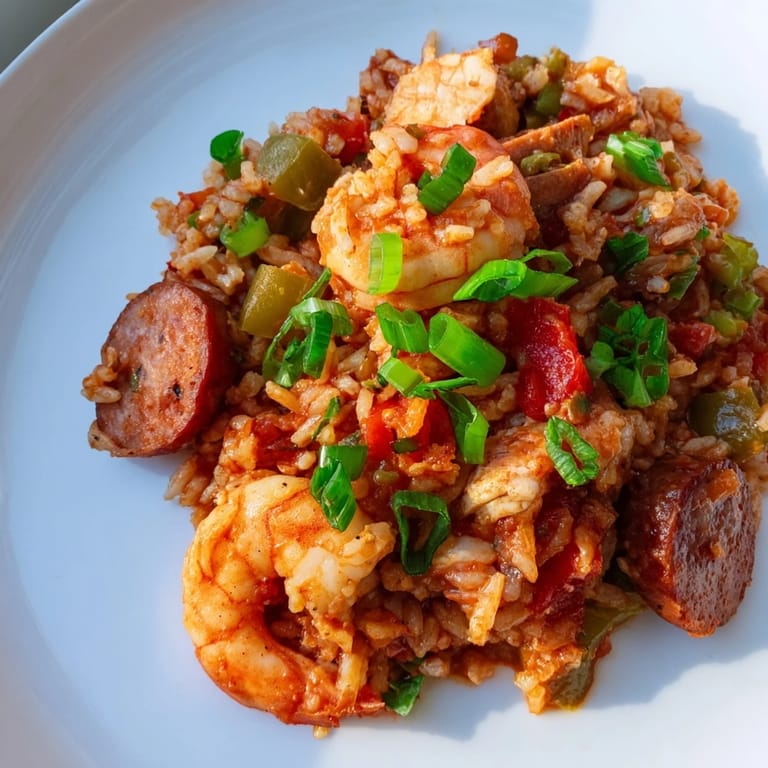
- Remove the pot from heat, discard the bay leaves, and fluff the whole thing gently with a fork so the rice stays light and the shrimp don't break apart.
 Save
Save I learned the real magic of jambalaya when my partner came home from work to find the whole apartment filled with the smell of smoke and spice, and they didn't even hesitate before setting the table. That moment—when food does the inviting for you—is when you know you've made something worth making again and again.
Why This Dish Works
Jambalaya succeeds because it's built on layers of flavor that develop at different temperatures and times. The sausage and chicken browning creates a savory foundation, the vegetables release their sweetness, the spices bloom in the toasted rice, and finally the shrimp adds brightness and texture. Nothing feels like an afterthought; everything belongs in the pot and plays a specific role. This is why you can make it ahead, reheat it, and it actually tastes better the next day—all those flavors keep getting to know each other.
Making It Your Own
The beauty of jambalaya is that it's flexible without losing its identity. You can swap chorizo for andouille if that's what you have, skip the shrimp entirely if shellfish isn't your thing, or add diced jalapeños if you want more heat than the cayenne provides. Some people add okra toward the end, others use brown rice, and I've seen folks add a splash of hot sauce right into the pot instead of serving it on the side. The technique stays the same; the soul of the dish remains.
Serving and Storing
Jambalaya is best served hot and fresh, ideally with cornbread to soak up the flavors and maybe a simple green salad to cut the richness. It keeps beautifully in the refrigerator for up to 4 days and reheats gently on the stovetop with a splash of broth if it's dried out. Freezing is possible but the shrimp texture sometimes suffers, so if you're planning ahead, consider making the dish without shrimp, freezing it, and adding fresh shrimp when you reheat.
- A bottle of hot sauce on the table lets everyone adjust heat to their preference without you worrying about it.
- Leftover jambalaya becomes lunch the next day and somehow tastes even better as the flavors have melded overnight.
- Don't skip the fresh parsley and spring onions at the end—they add brightness that cuts through the heaviness.
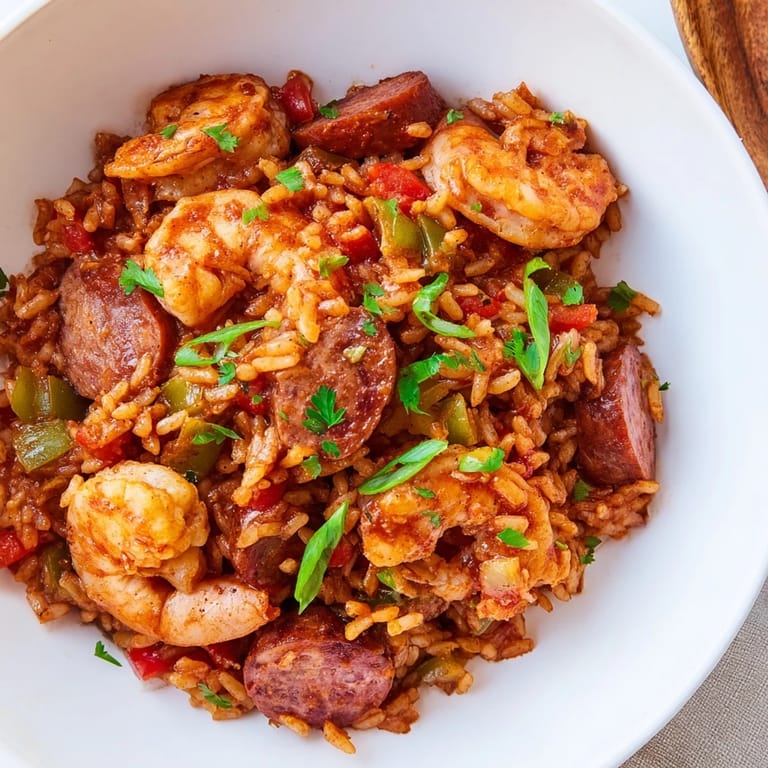 Save
Save This jambalaya has become my go-to meal when I want to feel like a confident cook and feed people something that tastes like home, even if it's not my own home's tradition. Every time I make it, someone asks for the recipe, and I smile because I remember being the one too intimidated to try it.
Recipe FAQs
- → What type of sausage works best in this dish?
Andouille sausage is traditional, but smoked kielbasa or chorizo can also be used for a smoky, spicy flavor.
- → Can I adjust the spice level?
Yes, increasing cayenne pepper or adding diced jalapeños provides extra heat to suit your preference.
- → Is it possible to make the dish without shrimp?
Omitting shrimp creates a satisfying chicken-and-sausage version that still captures the dish's essence.
- → What cooking equipment is needed?
A large heavy-bottomed pot or Dutch oven is ideal to brown ingredients and simmer the dish evenly.
- → How do I know when the jambalaya is done?
Rice should be tender, shrimp pink and cooked through, and the flavors well combined after simmering.