 Save
Save There's a particular moment in a kitchen when you stop following instructions and start cooking from instinct—that's when a roux transforms from a homework assignment into something alive. My first étouffée taught me this lesson the hard way, when I stood over a pot in a steamy New Orleans kitchen watching the flour and oil dance together, turning from pale blonde to mahogany to something almost black, and I realized I'd been holding my breath the entire time. The smell alone—nutty, deep, slightly dangerous—made me understand why this dish matters to people who grew up eating it. That day I learned that patience with a roux isn't boring; it's the foundation of something worth tasting.
I made this for my neighbor after she'd helped me move boxes for hours, and watching her take that first bite over rice, then pause and close her eyes—that's when I understood why certain dishes get passed down through generations. She told me it tasted like a memory, and I think that's exactly what good food should do.
Ingredients
- Vegetable oil: This needs to be neutral and handle high heat without smoking; I've found that staying consistent with one oil (whether it's canola or vegetable) helps you develop an instinct for when the roux is truly ready.
- All-purpose flour: The ratio of oil to flour is crucial—equal parts creates the foundation, and you'll stir this constantly for 15 to 20 minutes, so settle in and don't rush it.
- Onion, bell pepper, and celery: This trinity is non-negotiable in Cajun cooking; the combination creates a flavor base that feels complete and balanced before you've even added stock.
- Garlic: Add it only after the soffritto has started releasing its sweetness, or it can turn bitter and harsh.
- Shrimp: Buy it as fresh as possible, and don't skip the peeling and deveining yourself—the texture difference is real and worth those few extra minutes of prep.
- Seafood stock: Chicken stock works fine, but seafood stock deepens the flavors in a way that feels unmistakably right; if using seafood stock, you're already halfway to something special.
- Worcestershire sauce: This is optional but adds a savory backbone that rounds out the spices beautifully.
- Cajun seasoning, cayenne pepper, and bay leaf: These are your heat and aroma; start conservative and taste as you go, because cayenne has a long finish that builds on your palate.
Tired of Takeout? 🥡
Get 10 meals you can make faster than delivery arrives. Seriously.
One email. No spam. Unsubscribe anytime.
Instructions
- Make your roux foundation:
- Heat the oil over medium heat, then whisk in the flour gradually, working out any lumps as you go. This is not a task to multitask through; stand at the stove and stir constantly, watching the color shift from tan to golden to deep chocolate brown over about 15 to 20 minutes.
- Build the soffritto:
- Once your roux reaches that rich chocolate color, add the diced onion, bell pepper, and celery all at once—the vegetables will sizzle and release steam, and you'll soften them for 5 to 7 minutes until they start to turn translucent. This is the moment the kitchen smells like home cooking.
- Add aromatics:
- Stir in your minced garlic and let it toast for just 1 minute; you want it fragrant and softened, not browned and bitter. The moment you smell that sharp garlic mellow and blend with the peppers and celery, you'll know you've timed it right.
- Incorporate the stock:
- Pour in your seafood stock gradually while stirring, creating a smooth sauce without lumps; this is where the roux and vegetables truly marry into something silky. Keep stirring until everything is fully combined and the sauce takes on an even color.
- Season and simmer the shrimp:
- Add the shrimp, Worcestershire sauce if using, Cajun seasoning, cayenne, bay leaf, salt, and pepper, then bring everything to a gentle simmer. Reduce heat to low and cook uncovered for 20 to 30 minutes, stirring occasionally, until the sauce thickens and the shrimp turn pink and firm.
- Finish and serve:
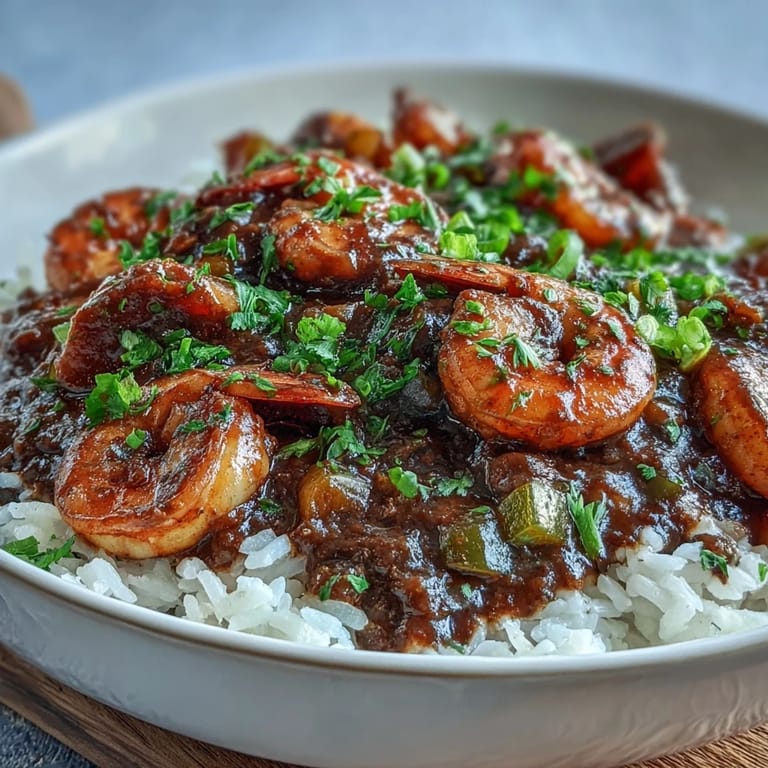
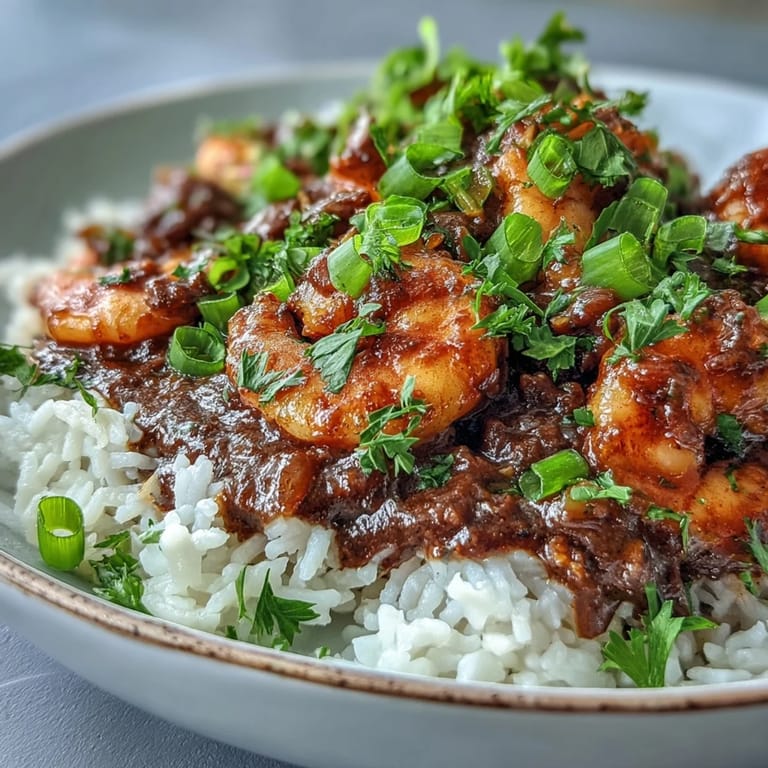
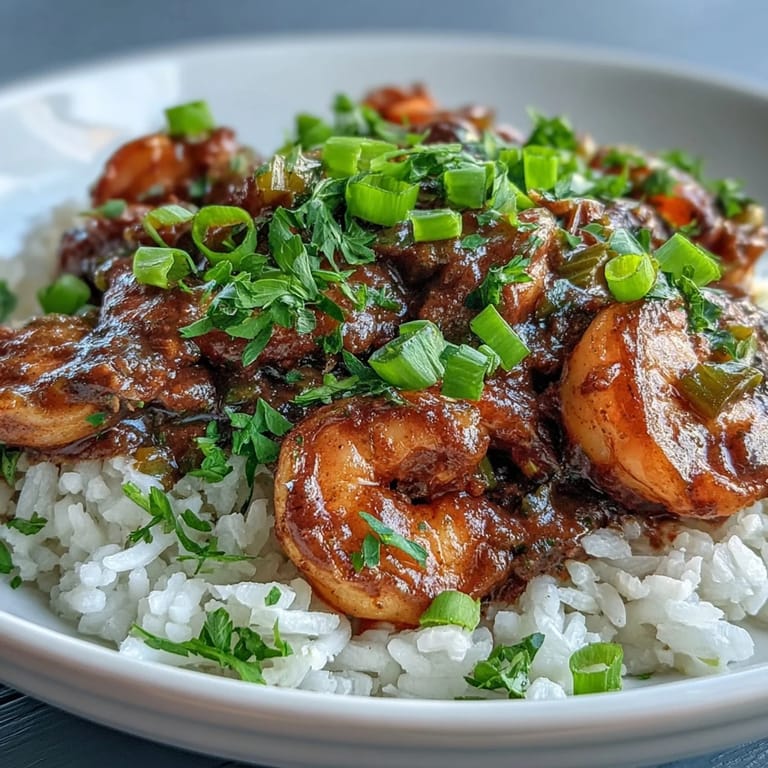
- Taste the étouffée and adjust seasoning to your preference, then discard the bay leaf. Ladle the shrimp and sauce over fluffy white rice, then scatter fresh green onions and parsley over top for color and brightness.
 Save
Save My grandmother told me that étouffée means to smother in French, and that's exactly what happens—the shrimp gets smothered in sauce, your senses get smothered in warmth and spice, and somehow you end up feeling taken care of by a bowl of food. That's the real magic of this dish.
Roux: The Heart of the Matter
A proper roux is the difference between thin gravy and a sauce that clings to every grain of rice and piece of shrimp. Many home cooks rush this step or give up when they're halfway there, but the deep brown color you're after takes time and won't happen any faster if you turn up the heat. I've learned to think of roux-making as a meditation rather than a chore—something meditative happens when you stand at the stove and watch flour transform into liquid gold.
The Holy Trinity and Why It Matters
Onion, bell pepper, and celery create what Cajun cooks call the holy trinity, and this combination appears in almost every traditional Louisiana dish for good reason. The onion brings sweetness, the celery adds an earthy background note, and the bell pepper ties everything together with brightness; together, they create a flavor profile that feels complete and balanced. When these three vegetables are diced to similar sizes and cooked together, they release their juices slowly, building layers of flavor that a quick sauté can't achieve.
Making It Your Own
Once you understand the structure of étouffée—roux, trinity, stock, protein, spices, and time—you can adapt it endlessly. Some nights I use chicken or andouille sausage instead of shrimp, other times I add mushrooms for earthiness or okra for texture. The technique stays the same; only the main ingredient changes, and the sauce adapts beautifully to whatever you choose.
- Substitute chicken, crawfish, sausage, or even mushrooms for the shrimp without changing the cooking method or time significantly.
- Reduce or omit the cayenne pepper entirely if you prefer a milder dish that lets the other spices and vegetables shine through.
- Serve alongside crusty French bread or a crisp green salad to balance the richness and add textural contrast to your plate.
 Save
Save This is the kind of dish that makes people slow down at the dinner table and remember why gathering over food matters. Once you've made it once, you'll find yourself reaching for it again and again.
Recipe FAQs
- → What makes an authentic étouffée?
An authentic étouffée starts with a dark roux cooked to chocolate color, the holy trinity of vegetables (onion, bell pepper, celery), and fresh shellfish. The sauce should be rich and thick, perfectly coating the shrimp or crawfish.
- → How dark should the roux be?
The roux should reach a deep chocolate brown color, typically taking 15-20 minutes of constant stirring. This dark roux provides the signature flavor and rich color of traditional étouffée.
- → Can I make this with crawfish instead of shrimp?
Absolutely! Crawfish is traditional in many parts of Louisiana. Use peeled crawfish tails exactly as you would shrimp, adding them during the last 20-30 minutes of cooking.
- → How do I store and reheat leftovers?
Store in an airtight container in the refrigerator for up to 3 days. Reheat gently over low heat, adding a splash of stock or water if the sauce has thickened too much. The flavors often develop even more overnight.
- → What can I substitute for shrimp?
Chicken, andouille sausage, or mushrooms work well as substitutes. For a vegetarian version, use mushrooms and vegetable stock, adjusting seasoning to maintain depth of flavor.
- → Is étouffée spicy?
Traditional étouffée has a mild to medium heat from Cajun seasoning and cayenne. You can easily adjust the spice level by reducing or increasing the cayenne pepper amount to suit your preference.