 Save
Save My dad used to smoke ribs on the weekends, and the smell would drift through the entire neighborhood—which either made people jealous or curious enough to knock on our back door. When I finally got the courage to ask for his method, he grinned and said the real secret was patience and not fussing with them too much. I've since learned that you don't need a fancy smoker to get that tender, fall-off-the-bone magic; a low oven does the work beautifully, and the glaze at the end adds that caramelized finish that makes everyone lean in close.
Last summer, I made these for a birthday gathering where half the guests said they didn't really like ribs—too messy, too heavy, they claimed. By the time I set the platter down, there was an almost embarrassing silence as everyone reached for them, and those same skeptics were the last ones at the table, napkins tucked in their shirts like they meant business.
Ingredients
- Pork or beef ribs (1.5–2 kg / 3–4 lbs): The meat itself is what carries this dish, so choose ribs with good marbling and a decent layer of meat on top; beef ribs are meatier if you want more substance, pork ribs more tender.
- Olive oil (2 tbsp): This helps the dry rub cling to every surface and prevents sticking.
- Brown sugar (2 tbsp): Adds sweetness and helps form a caramelized crust when the glaze hits the heat.
- Smoked paprika (1 tbsp): This is the secret that makes people ask if you smoked them; don't skip it or use regular paprika.
- Garlic powder (1 tsp), onion powder (1 tsp), black pepper (1 tsp), and salt (1 tsp): These build layers of savory depth without overpowering anything.
- Cayenne pepper (½ tsp, optional): Add this only if you want a subtle heat that creeps in at the end.
- Barbecue sauce (1 cup): Use your favorite store-bought version or make your own; this is your finishing glaze and flavor signature.
- Honey (2 tbsp) and apple cider vinegar (1 tbsp): These brighten and balance the sauce, adding a touch of complexity that tastes less one-note.
Tired of Takeout? 🥡
Get 10 meals you can make faster than delivery arrives. Seriously.
One email. No spam. Unsubscribe anytime.
Instructions
- Set up your oven and prep the ribs:
- Preheat your oven to 150°C (300°F) and line a large baking sheet with foil—this makes cleanup easier and helps the heat distribute evenly. Flip the ribs over and peel away that thin, papery membrane from the back; it's chewy and nobody wants it in their teeth. Pat the ribs completely dry with paper towels so the rub sticks instead of sliding off.
- Build your flavor foundation:
- Rub a thin layer of olive oil all over the ribs, getting into every crevice. Mix your dry rub ingredients in a bowl—brown sugar, smoked paprika, garlic powder, onion powder, pepper, salt, and cayenne if using—then coat the ribs generously on both sides, pressing gently so it adheres.
- Low and slow bake:
- Lay the ribs meat-side up on your prepared sheet, cover tightly with foil, and slide them into that low oven for 2 to 2½ hours. You're looking for meat that pulls back from the bone when you nudge it and feels impossibly tender; the slower heat makes the collagen break down into gelatin, which is what gives you that silky texture.
- Prepare your glaze:
- While the ribs bake, whisk together your barbecue sauce, honey, and apple cider vinegar in a small bowl. The honey adds richness and helps caramelize, while the vinegar cuts through the sweetness and prevents the glaze from tasting cloying.
- Final kiss of heat:
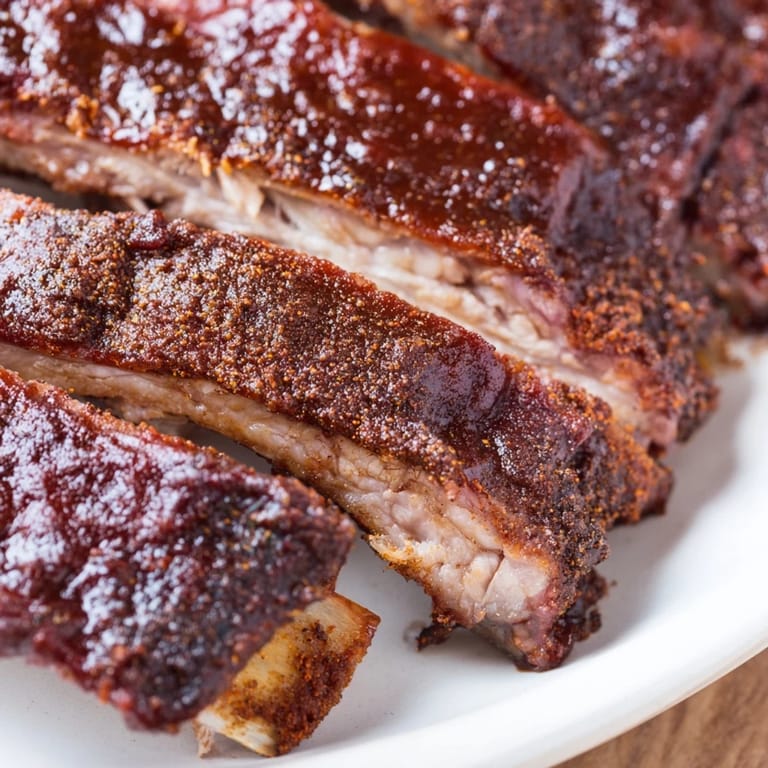
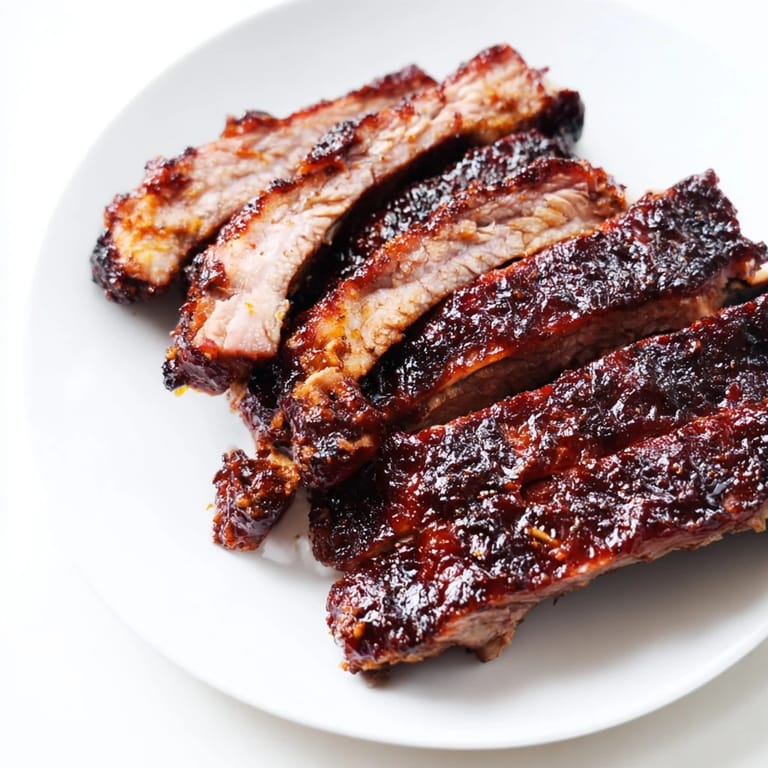
- Remove the ribs from the oven and increase the temperature to 220°C (425°F), or get your grill to medium-high heat if you prefer. Brush the ribs generously with your glaze mixture, return them to the oven uncovered for 10 to 15 minutes, and baste once more halfway through; you want that sticky, caramelized finish that catches the light.
- Rest and serve:
- Let the ribs rest for 5 minutes so the juices redistribute, then slice between the bones with a sharp knife. Serve with extra sauce on the side and watch people come back for seconds.
 Save
Save There's a moment when you pull those ribs out and see the meat has shrunk back from the bones, and you just know you've nailed it. That feeling of confidence before you've even tasted them is half the pleasure of cooking something like this.
The Dry Rub Is Everything
The dry rub is where your personality goes into these ribs. I learned this the hard way after making bland ones for years—the spices are what sing here, not the barbecue sauce. Smoked paprika is non-negotiable; it gives you that depth that makes people think you smoked them for hours. Brown sugar isn't just sweetness; it caramelizes under heat and creates a light crust that contrasts beautifully with the tender meat underneath. Don't be shy with the seasoning; ribs can handle bold flavors.
Choosing Between Pork and Beef
Pork ribs cook faster and tend to be more tender right out of the oven, which is why they're the crowd-pleaser choice. Beef ribs are meatier and more substantial, with a richer flavor that holds up well if you decide to finish them on a grill. Whichever you choose, look for ribs with a decent thickness and not too much exposed bone; that's where the flavor and juiciness live.
Finishing Techniques
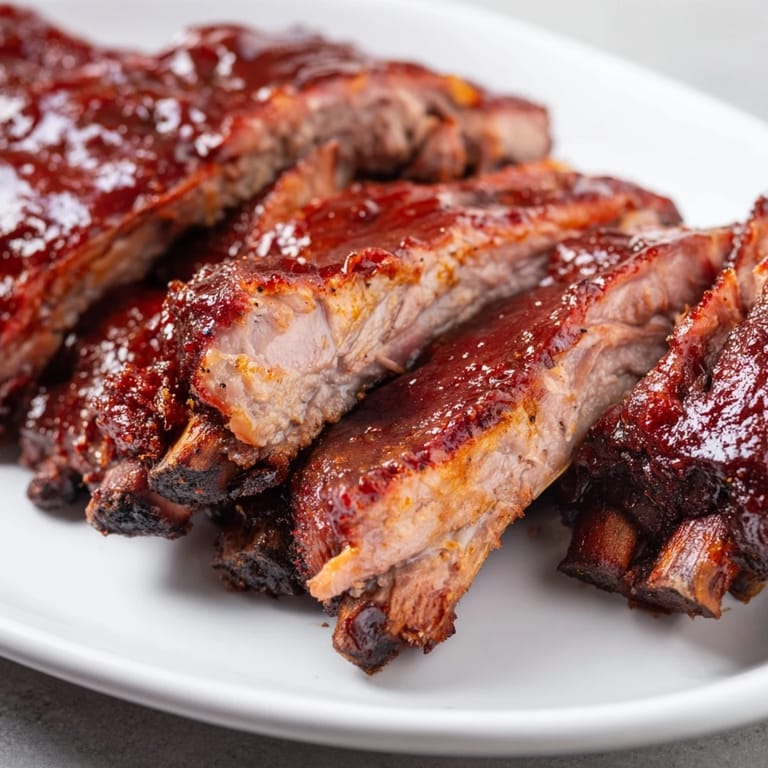
After the long, low bake, your ribs are already tender and delicious, but the final glaze is what people remember. The high heat caramelizes the sauce into something glossy and sticky that clings to the meat and forms those darker edges everyone fights over. If you have access to a grill, finishing over indirect medium-high heat gives you a slight char that adds another layer of smoky flavor without drying things out. Even in the oven, those final minutes under high heat transform your ribs from good to restaurant-quality.
- Baste once more halfway through the glaze phase to ensure even coverage and deep caramelization.
- If your glaze is burning before the ribs look glossy, lower the oven temperature slightly and give it a few more minutes.
- That 5-minute rest after cooking is when the meat relaxes and reabsorbs its juices, so don't skip it even though you're eager to eat.
 Save
Save These ribs have become my go-to for feeding a crowd because they're almost impossible to mess up once you follow the timing, and they taste like you fussed over them for hours. There's something generous about setting down a platter of fall-off-the-bone ribs that makes people feel cared for.
Recipe FAQs
- → What is the best way to ensure ribs are tender?
Cooking ribs low and slow at a moderate temperature gives the meat time to break down and become tender. Covering with foil during baking helps retain moisture.
- → Can I use pork or beef ribs for this dish?
Yes, both pork and beef ribs work beautifully with this seasoning and cooking method, yielding juicy, flavorful results.
- → How do I get a sticky, caramelized glaze on my ribs?
After slow-cooking, increase the heat and brush ribs generously with a barbecue sauce mixture, then finish in the oven or on the grill until the glaze bubbles and thickens.
- → What sides pair well with these smoky ribs?
Traditional sides like coleslaw, cornbread, or baked beans complement the rich, smoky flavors wonderfully.
- → Can I adjust the spice level of the dry rub?
Yes, modify the cayenne pepper amount to suit your preferred spice level or omit it for a milder taste.