 Save
Save A humid Tuesday afternoon in my kitchen once felt like a heavy blanket until I started this soup. The sharp citrus scent of lemongrass hitting the hot stock instantly changed the mood of the entire house. This soup has a way of waking up every corner of your senses with its bright acidity. It is the culinary equivalent of turning on a bright light in a dim room.
My first attempt involved accidentally rubbing my eye after smashing the Thai chiles. I spent twenty minutes rinsing while my brother watched the pot simmer in the background. Despite the tearful start the soup turned out so vibrant that we finished the entire pot standing over the stove. We did not even bother with bowls for that final half cup of broth.
Ingredients
- Chicken: Slicing the breast thinly against the grain ensures the meat stays tender while it poaches in the hot liquid.
- Lemongrass: Smashing the stalks before dropping them in releases those essential oils that give the soup its signature aroma.
- Kaffir lime leaves: Tearing these leaves by hand is better than cutting because it bruises the edges and releases more flavor.
- Galangal: This root adds a piney citrus note that ginger can mimic but never truly replace.
- Thai birds eye chiles: These tiny peppers pack a significant punch so start with one and work your way up.
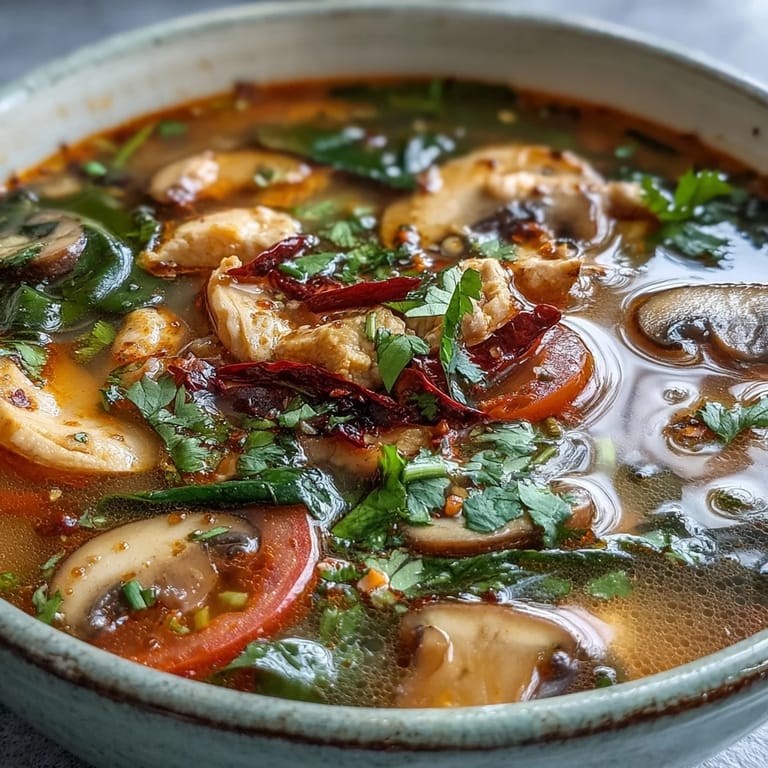
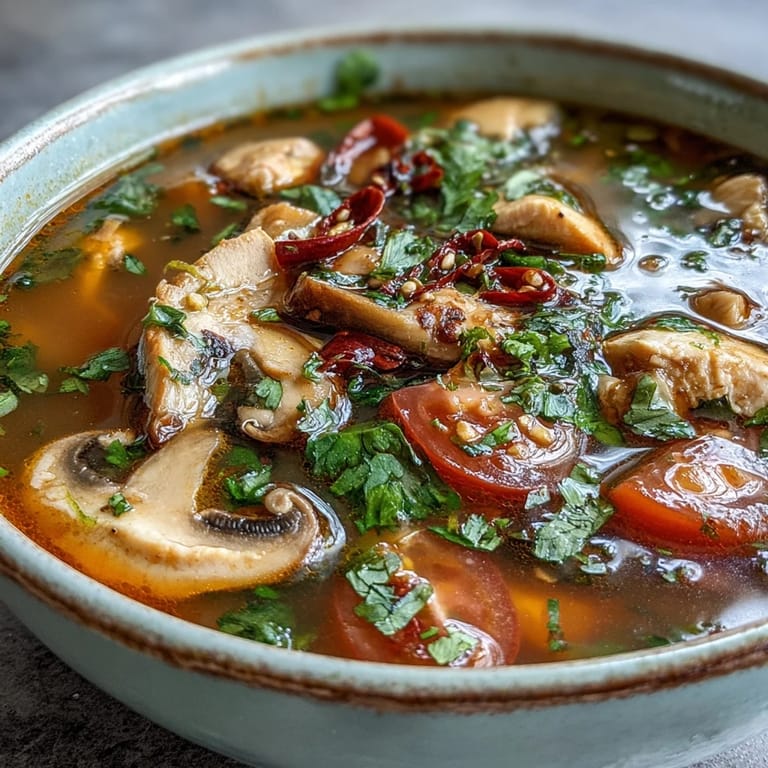
- Mushrooms and Tomatoes: These vegetables absorb the spicy broth and provide a juicy texture to every spoonful.
- Nam prik pao: This roasted chili paste provides a smoky depth and that beautiful ruby red oil on the surface.
- Fish sauce: This acts as the savory backbone that ties the sour lime and spicy chiles together perfectly.
- Lime juice: Always add this after the heat is turned off to keep the bright citrus flavor from turning bitter.
Tired of Takeout? 🥡
Get 10 meals you can make faster than delivery arrives. Seriously.
One email. No spam. Unsubscribe anytime.
Instructions
- Infusing the aromatics:
- Drop the lemongrass galangal lime leaves and smashed chiles into the boiling stock to let their scents fill your kitchen. Simmer them for five minutes until the water turns a light golden hue.
- Poaching the chicken:
- Slide the chicken pieces in gently and watch them turn opaque in the bubbling broth. This only takes a few minutes and keeps the meat incredibly juicy.
- Adding the garden:
- Toss in the mushrooms tomatoes and onions so they soften slightly while retaining their shape. You want the vegetables to be tender but still provide a bit of structure to the soup.
- Building the base:
- Stir in the chili paste and fish sauce along with the sugar and salt until the broth turns a rich and inviting color. This is when the kitchen truly begins to smell like a professional Thai restaurant.
- Final brightness:
- Pull the pot from the flame and swirl in the fresh lime juice for that essential zing. Taste a spoonful now to see if you need an extra pinch of salt or a splash more lime.
 Save
Save During a winter power outage we cooked this over a small camping stove in the living room. The steam smelled like a tropical vacation while we sat wrapped in wool blankets. We laughed about how the spicy broth warmed us from the inside out better than any space heater could. It turned an inconvenient night into a small celebratory feast that I will never forget.
Aromatic Preparation
Taking the time to properly bruise your aromatics makes a world of difference. I once rushed this part and the broth tasted like plain chicken water instead of the vibrant infusion I wanted. Now I use the back of my knife to firmly crush the lemongrass until it looks shredded. This releases the internal moisture which holds all the floral magic.
Finding Balance
The dance between salty sour and spicy is the soul of this dish. I always keep a little extra sugar and lime juice on the side to adjust the final profile. Sometimes the tomatoes are sweeter or the chiles are hotter than the last batch. Trusting your tongue over the measurements is the best way to master this soup.
Serving Suggestions
This soup shines brightest when served piping hot alongside a bowl of steamed jasmine rice. The rice soaks up the spicy broth and provides a neutral contrast to the intense flavors. I love watching the red chili oil swirl into the white rice as I eat. It is a simple presentation that feels incredibly elegant and satisfying.
- Serve with extra lime wedges for those who love an aggressive sour kick.
- Keep the cilantro whole for a beautiful leafy presentation on top.
- Provide a small side bowl for guests to discard the woody aromatics.
 Save
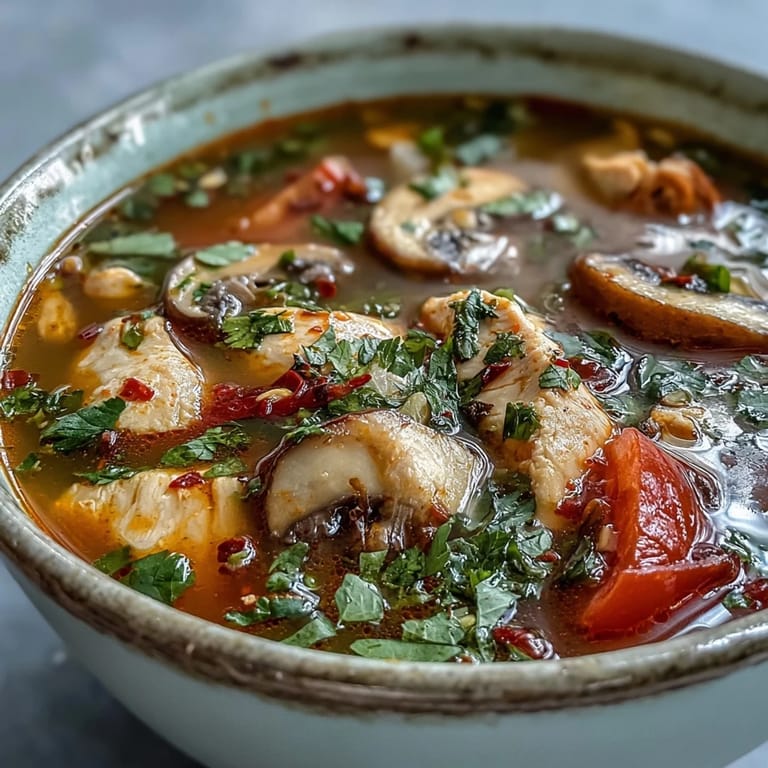
Save This soup is a vibrant journey that proves how a few simple aromatics can create a masterpiece. I hope every spoonful brings a bit of sunshine to your table today.
Recipe FAQs
- → How spicy is Tom Yum Gai?
The heat level depends on how many Thai bird's eye chiles you use. Two smashed chiles provide medium spice, but you can reduce to one or remove seeds for milder heat. Add extra chiles during garnishing for those who prefer it hotter.
- → Can I make this soup vegetarian?
Substitute vegetable stock for chicken stock and use firm tofu or extra mushrooms instead of chicken. Replace fish sauce with soy sauce or vegetarian fish sauce alternative for authentic umami flavor without animal products.
- → What makes the broth red versus clear?
Nam prik pao (Thai roasted chili paste) gives the broth its reddish hue and deep, smoky flavor. Without it, you'll have a clearer Tom Yum. The paste is essential for traditional restaurant-quality taste and that rich orange-red color.
- → Can I freeze leftovers?
The broth freezes beautifully for up to 3 months. However, mushrooms and chicken may become slightly rubbery after thawing. For best results, freeze the broth separately and add fresh vegetables and protein when reheating.
- → What's the difference between Tom Yum Gai and Tom Yum Goong?
Tom Yum Gai features chicken while Tom Yum Goong uses shrimp. The broth base remains identical, though shrimp cook much faster—just 1-2 minutes. Both versions showcase the same signature spicy, sour, and aromatic profile that makes this soup famous worldwide.