 Save
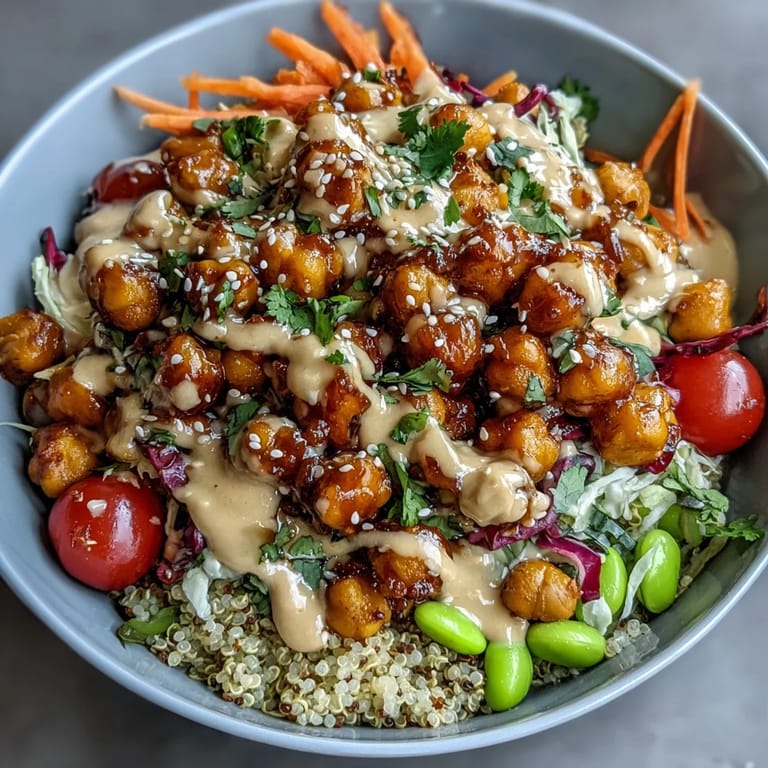
Save There's something about the smell of chickpeas crisping in the oven that makes you feel like you're actually cooking something worthwhile. One afternoon, I was standing in my kitchen feeling uninspired by the usual salad routine when I spotted a couple of cans of chickpeas in the pantry and thought, why not roast them? That small decision led to this bowl—a real turning point in how I approach vegetarian meals. It's the kind of dish that tastes indulgent but leaves you energized rather than sluggish, and once you nail the peanut sauce, you'll be making this constantly.
I served this to a friend who'd recently gone vegetarian and was still figuring out what to eat, and watching her face when she bit into one of those crispy chickpeas was genuinely rewarding. She asked for the recipe immediately, and I realized this bowl had crossed from my kitchen into hers—that moment when food becomes part of how people actually live their lives.
Ingredients
- Chickpeas (2 cans, drained and rinsed): These are your protein anchor, and rinsing them thoroughly removes excess starch so they'll crisp up beautifully in the oven instead of steaming.
- Olive oil (1 tbsp): Just enough to coat and help the spices adhere; too much and they won't get crispy, too little and they'll stick.
- Smoked paprika, cumin, garlic powder, salt, and pepper: This spice blend is what separates these from plain roasted chickpeas—the smoked paprika especially adds a depth that makes them taste almost savory.
- Brown rice or quinoa (2 cups cooked): The foundation that holds everything together; I prefer quinoa for its nutty flavor, but rice is equally satisfying.
- Red cabbage (1 cup shredded): The slight bitterness and crunch are essential—they cut through the richness of the peanut sauce beautifully.
- Carrots (1 cup julienned), cucumber (1 cup sliced), cherry tomatoes (1 cup halved): These vegetables bring freshness and texture variation; julienne the carrots if you can, as they're more pleasant than chunks.
- Edamame (1/2 cup): An optional but worthwhile boost of extra protein and a slightly sweet earthiness that complements peanuts.
- Fresh cilantro (1/4 cup chopped): Don't skip this—it brightens everything and adds an herbal note that ties the whole bowl together.
- Creamy peanut butter (1/3 cup): Use the kind without added sugars or hydrogenated oils; it makes a noticeable difference in the sauce's texture and taste.
- Soy sauce (2 tbsp, or tamari for gluten-free): The umami foundation of your sauce; it grounds all the other flavors.
- Maple syrup or honey (1 tbsp): Just a touch of sweetness to balance the saltiness and heat—maple has a subtler presence if you're sensitive to sweetness.
- Rice vinegar (1 tbsp): This provides brightness and helps emulsify the sauce; don't substitute with white vinegar, which is harsher.
- Sriracha or chili sauce (1 tsp, optional): Your call on heat level, but even a small amount adds complexity beyond just spice.
- Garlic (1 clove, finely minced): Raw garlic in the sauce gives it a sharp edge that balances the creaminess of the peanut butter.
- Warm water (2–4 tbsp): Essential for getting the sauce to the right consistency; start with less and add gradually.
- Roasted peanuts (2 tbsp chopped) and sesame seeds (1 tbsp): These finish the bowl with a satisfying crunch and nuttiness.
- Lime wedges: Squeeze them over everything at the end—the acid brightens the entire dish.
Tired of Takeout? 🥡
Get 10 meals you can make faster than delivery arrives. Seriously.
One email. No spam. Unsubscribe anytime.
Instructions
- Get your oven ready and prep your station:
- Preheat to 425°F and line a baking sheet with parchment paper. This temperature is high enough to crisp the chickpeas quickly without drying them out completely. Having everything measured and ready to go will make assembly feel effortless later.
- Season and roast the chickpeas:
- Toss your drained chickpeas with olive oil and all the spices—smoked paprika, cumin, garlic powder, salt, and pepper. Spread them in a single layer on the baking sheet and let them roast for 20–25 minutes, shaking the pan halfway through. You'll know they're done when they're golden and make a hollow sound when you shake the pan.
- Build your peanut sauce while the chickpeas roast:
- In a bowl, whisk together the peanut butter, soy sauce, maple syrup, rice vinegar, sriracha, and minced garlic until combined. The mixture will look thick at first, which is fine. Start whisking in warm water one tablespoon at a time until you reach a drizzle-able consistency—it should coat the back of a spoon but flow easily.
- Prepare your vegetables and grains:
- If your rice or quinoa isn't already cooked, start it now so it's done around the same time as the chickpeas. While that cooks, julienne or slice your vegetables and give everything a quick wash. Chop your cilantro fresh right before assembly so it doesn't wilt.
- Assemble your bowls:
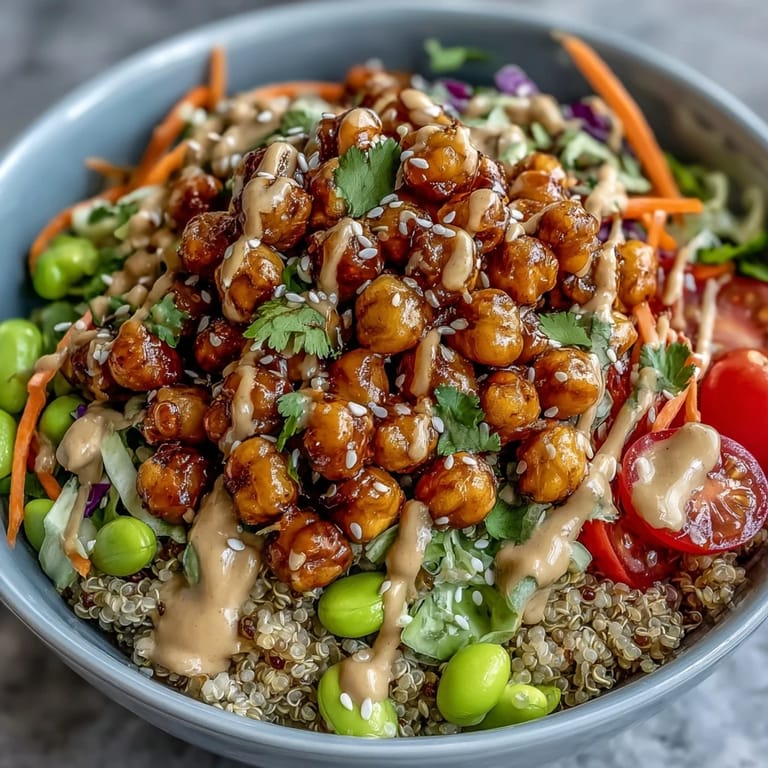
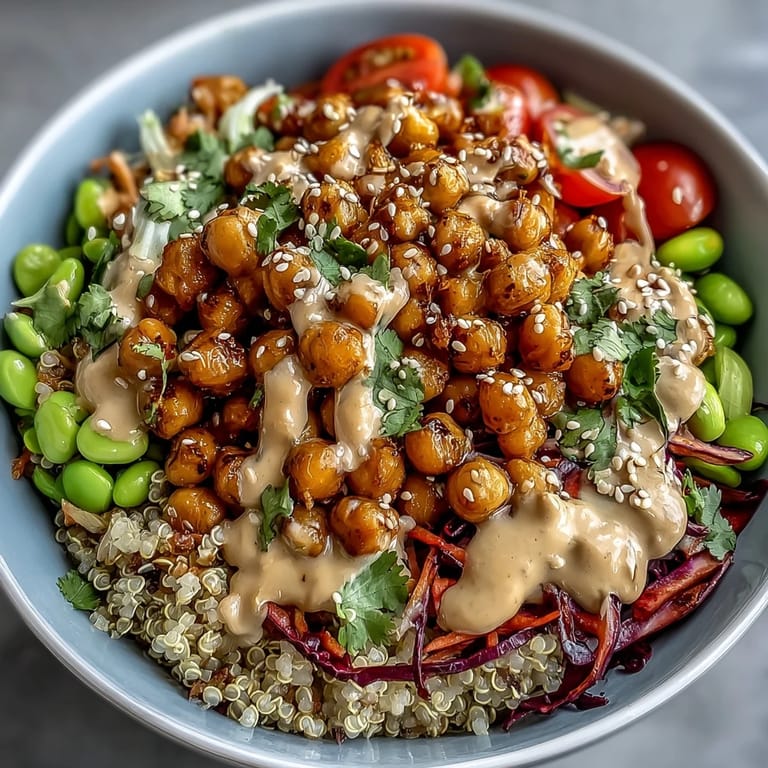
- Divide the cooked grain among four bowls as your base. Arrange the roasted chickpeas, shredded cabbage, carrots, cucumber, tomatoes, edamame, and cilantro on top of each bowl in sections if you want it to look polished, or toss everything together if you prefer.
- Finish and serve:
- Drizzle the peanut sauce generously over each bowl, then sprinkle with chopped peanuts and sesame seeds. Serve immediately with lime wedges on the side so people can squeeze them over to taste.
 Save
Save I made this bowl for lunch three days in a row once, and by the third day I realized I wasn't getting bored—I was actually looking forward to it. That's when I knew it had become more than a recipe; it was something I could turn to on days when I wanted food that felt intentional and nourishing.
Why This Bowl Works as a Complete Meal
The beauty of this bowl is that it hits all three macronutrient categories without any animal products, which genuinely surprised me the first time I calculated the numbers. The chickpeas and peanut sauce deliver protein and healthy fats that keep you satisfied for hours, while the grain and vegetables provide fiber and complex carbohydrates. There's no hunger crash afterward, just a steady kind of fullness that feels earned rather than sluggish.
Making It Your Own
This bowl is forgiving in the best way—you can swap almost any vegetable depending on what's in your crisper or what's in season. I've made versions with roasted broccoli, raw spinach, shredded beets, and even leftover roasted sweet potato. The peanut sauce is also endlessly adaptable; add lime juice for extra brightness, a touch of coconut milk for creaminess, or more sriracha if heat is what you're after.
Storage and Meal Prep
This bowl actually tastes great the next day, though the vegetables lose some crispness if dressed too early. I've learned to keep the sauce separate and dress the bowl when I'm ready to eat. The roasted chickpeas stay crispy in an airtight container for three days, and the grain keeps for about four days in the fridge, so you can build bowls throughout the week without cooking fresh every time.
- Store roasted chickpeas and sauce separately so vegetables stay crisp and components last longer.
- Make a double batch of peanut sauce—you'll find yourself using it on other things immediately.
- Prep vegetables the night before, but chop cilantro and dress the bowl just before eating for maximum freshness.
 Save
Save This bowl became a staple in my rotation because it proved to me that vegetarian cooking doesn't require compromise—it just requires attention to texture, flavor, and the small details that make food satisfying. Make it once and it'll probably become yours too.
Recipe FAQs
- → How do I achieve crispy roasted chickpeas?
Toss chickpeas with olive oil and spices, then roast at 425°F for 20-25 minutes, shaking halfway until golden and crisp.
- → Can I substitute brown rice with other grains?
Yes, quinoa or cauliflower rice work well to complement the bowl’s textures and flavors.
- → How can I adjust the peanut sauce’s spice level?
Modify the amount of sriracha or chili sauce added to suit your preferred heat.
- → Are there alternatives to soy sauce for gluten-free options?
Use tamari as a gluten-free substitute to maintain the sauce’s savory depth.
- → What toppings enhance the bowl’s flavor?
Chopped roasted peanuts, sesame seeds, and fresh lime wedges add crunch and brightness.