 Save
Save The beauty of a grain bowl hit me one Tuesday when I was standing in my kitchen with half a bell pepper, some leftover rice, and absolutely no energy to think about dinner. I tossed everything into a bowl, drizzled some oil and lemon juice over it, and suddenly had something that felt intentional and nourishing instead of like I was just scraping together scraps. That simple moment taught me that the best meals don't need to be complicated—they just need good foundations and the freedom to build them your way.
I made these for my sister's book club once, and watching everyone customize their own bowls felt like hosting a tiny celebration in my kitchen. Someone asked for extra seeds, another person swapped the feta for nothing at all, and one friend added a fried egg on top of hers like she'd invented the whole concept. That's when I realized grain bowls aren't really recipes—they're invitations to eat exactly what you want.
Ingredients
- Brown rice, quinoa, or farro (1 cup uncooked): Pick your grain personality—rice is forgiving and familiar, quinoa is the protein overachiever, farro brings a nutty chew that makes everything taste more intentional.
- Protein of choice (2 cups cooked): Chickpeas are your vegetarian workhorse and incredibly budget-friendly, grilled chicken brings substance, tofu works if you're thinking lighter, and shrimp adds a briny elegance if you're feeling fancy.
- Cherry tomatoes (1 cup halved): They burst with juice and brightness, turning a bowl from practical into alive—buy them when they're actually red and smell like tomatoes, not when they're pale and sad.
- Cucumber (1 cup diced): This is your cooling element, your crunch, your quiet hero that stops the bowl from feeling heavy.
- Shredded carrots (1 cup): Raw carrots bring a sweetness and texture that cooked everything can't match, plus they're honestly already half-prepared when you buy them shredded.
- Avocado (1 whole, sliced): Add this right before eating or it'll turn grey and sad—it's the diva ingredient but worth the drama because it brings creaminess nothing else can.
- Red onion (1/4 cup thinly sliced): The sharp, almost spicy bite here wakes up your mouth and proves that thin slicing actually matters.
- Feta cheese, crumbled (1/4 cup optional): This is optional because you might want dairy-free, but when you use it, it adds a salty, tangy contrast that makes everything else taste more of itself.
- Toasted pumpkin seeds (1/4 cup): Toast them yourself if you have two minutes—the difference between raw and toasted seeds is the difference between a snack and a statement.
- Fresh herbs (2 tbsp chopped): Use whatever's alive in your kitchen or on your counter, whether that's parsley, cilantro, or basil—fresh herbs transform a bowl from lunch into something you actually wanted.
- Olive oil (3 tbsp): Good olive oil matters here since it's not cooking down into anything, it's the final flavor—use something you actually like tasting.
- Lemon juice (1 tbsp): This brightens everything and keeps the whole bowl from tasting dull or heavy.
- Apple cider vinegar (1 tbsp): The sourness here balances richness and makes you keep eating another bite.
- Dijon mustard (1 tsp): A tiny amount creates depth without announcing itself—it's the secret handshake in this dressing.
- Garlic, minced (1 clove): One clove is enough because raw garlic is loud, and this dressing doesn't need to yell.
- Salt and pepper: Taste as you go because these two make the difference between a bowl that's forgettable and one that's unforgettable.
Tired of Takeout? 🥡
Get 10 meals you can make faster than delivery arrives. Seriously.
One email. No spam. Unsubscribe anytime.
Instructions
- Cook your grain with intention:
- Follow the package directions and give it the water and time it actually needs—rushing this step means a crunchy, disappointing base. Let it cool just enough to touch because warm grain actually absorbs flavor better than room temperature grain does.
- Prepare your protein:
- If you're grilling chicken, give it space and patience instead of flipping it constantly. If you're pan-searing tofu, press it first so it actually browns instead of steaming itself into submission.
- Make the dressing with a whisking motion:
- Whisk the olive oil, lemon juice, apple cider vinegar, mustard, and garlic together until it looks like it actually came together instead of like you just threw oils at acid. Season it to your taste because you're the one who has to eat it.
- Assemble with the grain as your foundation:
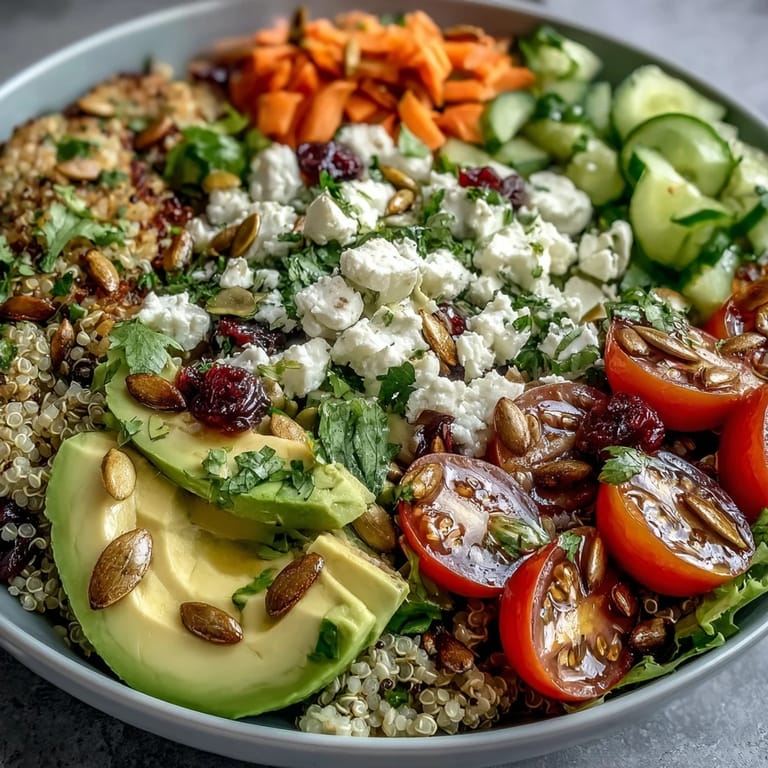
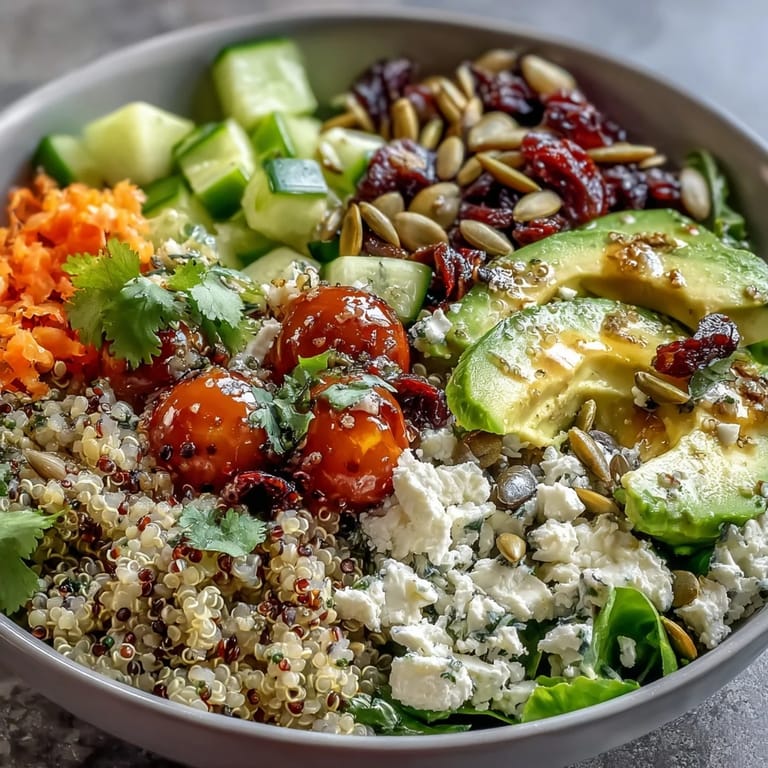
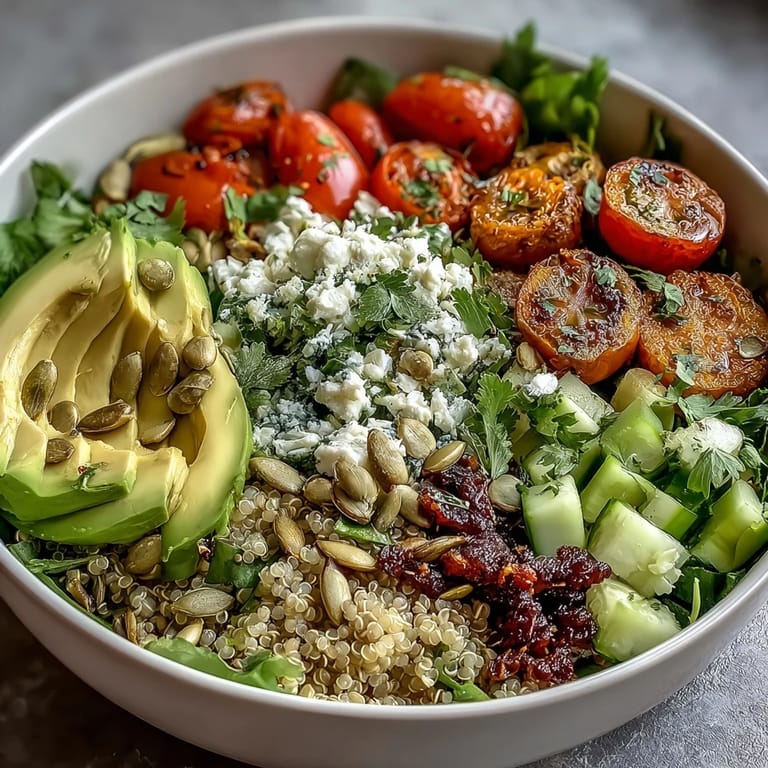
- Divide the cooked grain into bowls first, then arrange your protein, vegetables, avocado, red onion, feta, seeds, and herbs in a pattern that makes you happy. There's no wrong way to do this—make it beautiful to you.
- Dress it right before you eat:
- This is non-negotiable because soggy grain is the tragedy that ends all grain bowls. Drizzle the dressing over everything just as you're about to take the first bite.
 Save
Save My friend texted me a photo of a grain bowl she'd made using this formula, and she'd added crispy chickpeas on top of soft chickpeas, extra lime, and some hot sauce she loves. That's when I understood that this recipe isn't really mine to give you—it's a framework for something that becomes entirely yours the moment you make it.
Why Grain Bowls Are Your Secret Weapon
There's something almost meditative about building a grain bowl instead of plating a recipe that someone else designed for you. You're making decisions about texture, flavor, color, and nutrition with every ingredient you add, and somehow that process of choosing makes the food taste better when you finally eat it. It's the opposite of mindless eating—it's the definition of intentional nourishment.
The Customization That Changes Everything
I used to think I had to choose one thing and stick with it, but these bowls taught me that mixing proteins or using two different vegetables actually creates complexity and keeps your taste buds interested. The framework is loose enough that you can build something completely different every time you make it, which means you'll never get bored. Seasonal vegetables work beautifully here—whatever looks good at the market becomes part of your bowl.
Making This Your Meal-Prep Superpower
I started prepping grain bowls on Sunday afternoons, and it changed how I eat all week because reaching for something nourishing in the fridge beats ordering takeout every single time. The components keep better than you'd think—the grain stays tender, the raw vegetables stay crisp, and the dressing keeps separate in a small container waiting for its moment. This is the kind of meal that gets better as the week goes on because the flavors get to know each other, and somehow that makes weeknight dinner feel less like obligation and more like a gift you gave yourself three days earlier.
- Keep your dressing separate from the assembled bowl so nothing gets soggy before you're ready to eat it.
- Cook your grain in slightly salted water because grain that's seasoned from the start tastes infinitely better than grain you season at the end.
- Toast your seeds yourself if you can because they go from okay to wow in about three minutes in a dry pan.
 Save
Save A grain bowl is proof that simple food doesn't have to mean boring food, and that eating well doesn't require complicated recipes or stressed mornings. Make this your way, taste it as you go, and feed yourself something that actually makes you happy.
Recipe FAQs
- → What grains can I use as the base?
Brown rice, quinoa, or farro are great options, each providing a distinct texture and flavor.
- → How can I incorporate protein into the bowl?
Choose from cooked chickpeas, grilled chicken, pan-seared tofu, or cooked shrimp to add satisfying protein.
- → Are there vegan and gluten-free options available?
Yes, using chickpeas or tofu makes it vegan, and selecting rice or quinoa ensures it’s gluten-free.
- → What fresh toppings are recommended?
Cherry tomatoes, cucumber, shredded carrots, avocado, red onion, pumpkin seeds, and fresh herbs create vibrant flavors and textures.
- → How is the dressing prepared?
A simple blend of olive oil, lemon juice, apple cider vinegar, Dijon mustard, minced garlic, salt, and pepper forms a bright, tangy dressing.
- → Can I customize the bowl with other vegetables?
Feel free to swap in any seasonal vegetables or greens you prefer to keep it fresh and varied.