 Save
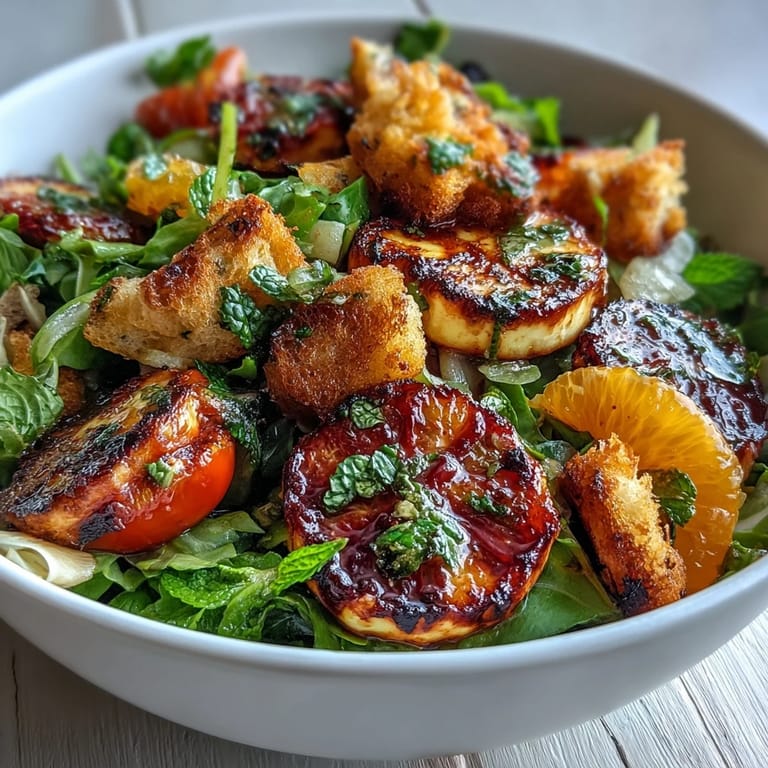
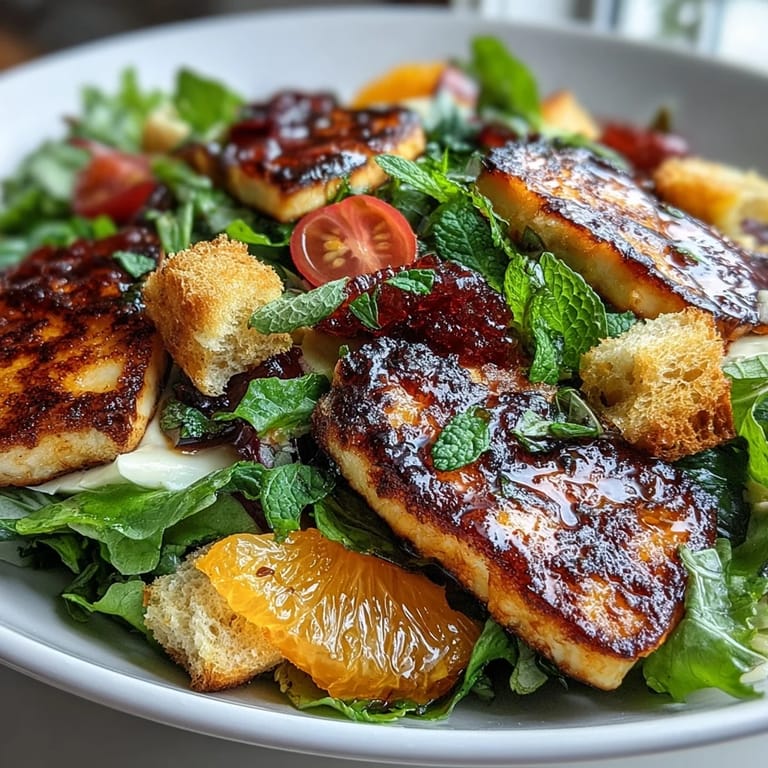
Save I discovered this salad on a sun-soaked afternoon when a friend arrived with a bag of blood oranges from the farmers market, their deep crimson skin practically glowing. We stood in the kitchen debating what to do with them when I remembered a fattoush I'd eaten years ago in Beirut, all bright and brash and alive. That's when it clicked: why not bring those two worlds together? The halloumi would get crispy and golden, the blood oranges would bleed their tart sweetness into everything, and somehow it all made sense.
I made this for a dinner party last spring when the seasons felt stuck between winter and summer, and somehow this salad captured that exact in-between moment. My partner kept sneaking bites of halloumi directly off the cooling plate, and everyone else fell into the same trap, so I had to fry an extra batch just to have enough for the actual salad. There's something about warm cheese meeting cold greens and bright citrus that makes people slow down and actually taste what they're eating.
Ingredients
- Halloumi cheese, sliced: This is the star, and it needs to be thick enough to develop that golden crust without melting through completely—I learned this by making it too thin once and watching it collapse into a sad puddle.
- Blood oranges, peeled and sliced into rounds: Their deep flavor is nothing like regular oranges; if you can't find them, don't settle for substitutes because the whole dish relies on that sophisticated tartness.
- Mixed salad greens: The combination of romaine, arugula, parsley, and mint matters more than you'd think—each brings its own personality and the mint especially brightens everything up.
- Cucumber, sliced: Keeps things cool and refreshing, a textural counterpoint to the crispy croutons.
- Cherry tomatoes, halved: Their sweetness balances the sharp sumac vinaigrette beautifully.
- Radishes, thinly sliced: They add a peppery bite that makes every other flavor pop.
- Red onion, thinly sliced: Sharp and clean, especially important to slice thin so it doesn't overpower the delicate greens.
- Sourdough bread, cut into cubes: The tang of sourdough pairs perfectly with the sumac dressing in ways white bread simply never could.
- Olive oil for croutons and frying: Use something you actually like tasting since it's not cooked down or hidden—I learned this when I used a mediocre oil and could taste the difference immediately.
- Extra virgin olive oil for dressing: This is where quality truly matters; it's the foundation of the vinaigrette and deserves respect.
- Fresh lemon juice: Bottled won't work here—the brightness needs to be real and immediate.
- Red wine vinegar: Adds depth and a subtle wine note that feels sophisticated without being noticeable.
- Ground sumac: This is the secret weapon, a lemony spice that ties the whole Middle Eastern concept together.
- Pomegranate molasses: A thick, tart reduction that adds complexity and a gorgeous dark note to the dressing.
Tired of Takeout? 🥡
Get 10 meals you can make faster than delivery arrives. Seriously.
One email. No spam. Unsubscribe anytime.
Instructions
- Toast your croutons until they're golden and inviting:
- Preheat your oven to 180°C (350°F), then toss those sourdough cubes with olive oil and sea salt. Spread them on a baking sheet and bake for 8–10 minutes, turning halfway through so they crisp up evenly on all sides—you'll know they're perfect when your kitchen smells absolutely incredible.
- Whisk together the dressing while the bread bakes:
- In a small bowl, combine the extra virgin olive oil, fresh lemon juice, red wine vinegar, sumac, and pomegranate molasses with salt and pepper. The mixture should smell bright and complex, almost floral from the sumac, and taste balanced between sharp and smooth.
- Get the halloumi golden and crispy:
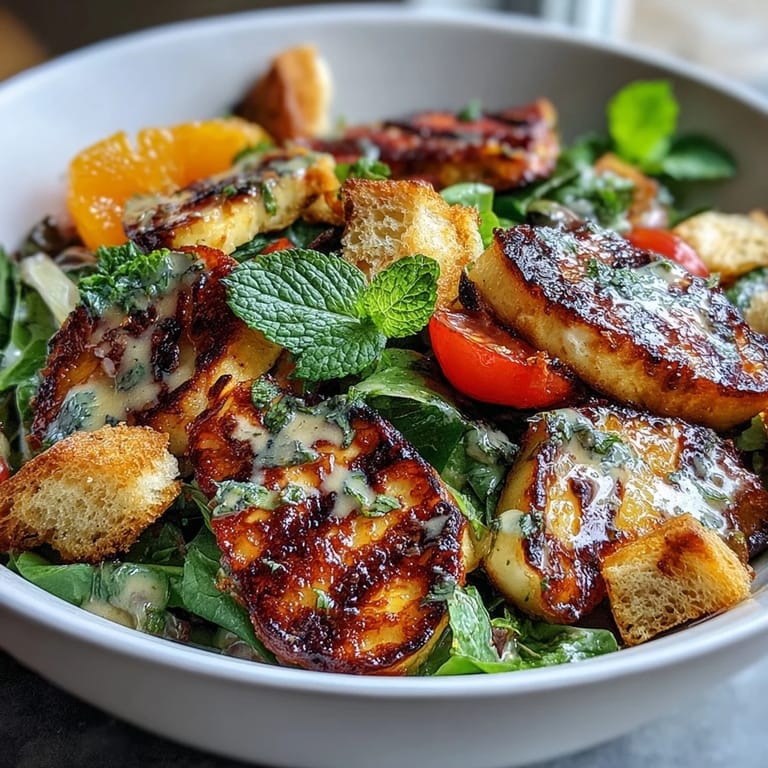
- Heat 1 tbsp olive oil in a nonstick skillet over medium heat, then add your halloumi slices and listen for that immediate sizzle. Fry for 1–2 minutes per side until they develop a deep golden crust that's crispy on the outside but still creamy within—this is the moment where the magic happens.
- Build your salad base with intention:
- In a large salad bowl, combine all the raw greens, cucumber, cherry tomatoes, radishes, and red onion. Don't toss yet; just let them sit there waiting like an orchestra before the conductor arrives.
- Bring everything together while the halloumi is still warm:
- Add the blood orange slices, those crispy halloumi pieces, and the golden croutons to your greens. The warmth of the cheese will slightly wilt the delicate herbs just enough to open them up to the dressing.
- Dress and serve with confidence:
- Drizzle that gorgeous sumac vinaigrette over everything and toss gently—you want to coat every leaf without bruising the tender greens or breaking up the croutons. Serve immediately while the halloumi is still warm and the croutons haven't softened.
 Save
Save One evening, a vegetarian friend who usually pushes salads to the side of her plate actually asked for seconds, and I realized it wasn't the salad itself that won her over—it was that the halloumi felt substantial enough to be the main event rather than just the supporting cast. That's when I understood this recipe could work for anyone, regardless of dietary preferences, because nothing here feels like a compromise.
The Halloumi Question
Getting halloumi exactly right requires understanding that it has a high melting point, which is why it fries instead of melting into oblivion. The thickness of your slice matters tremendously—too thin and it becomes a crispy wafer, too thick and the outside burns before the inside warms through. I've found that slicing it about a quarter-inch thick gives you that perfect golden crust while keeping the interior just barely creamy, almost squeaky between your teeth in the most satisfying way.
Blood Orange Season and Substitutions
Blood oranges arrive in winter and early spring, their window brief and precious, which is partly why this salad feels special when you make it. If you're outside that window, don't force regular oranges into the recipe—they'll taste different and the whole balance shifts. The deep, almost berry-like flavor of blood oranges pairs specifically with sumac and pomegranate molasses in a way that regular citrus simply cannot replicate, so either wait for the season or pivot to a different salad entirely.
The Dressing Ritual
This vinaigrette taught me that sometimes the small ingredients are the ones doing the real work. The pomegranate molasses and sumac are what transform this from a standard vinaigrette into something that tastes intentional and Middle Eastern, while the combination of lemon juice and red wine vinegar keeps everything balanced rather than overwhelming. Make extra dressing and keep it in a jar in your fridge—I've found myself pouring it over grain bowls, roasted vegetables, and even grilled fish for weeks after making this salad.
- Always taste as you whisk and adjust the acid balance to your preference; some prefer more tartness while others want the pomegranate molasses to shine through.
- The dressing tastes better at room temperature rather than cold, so pull it from the fridge a few minutes before serving if you've made it ahead.
- This same dressing works beautifully with grilled vegetables or as a marinade for white fish if you want to extend its usefulness.
 Save
Save This salad became a regular rotation in my kitchen because it somehow feels both impressive enough to serve to guests and simple enough to make on a random Tuesday for myself. There's something honest about a dish that doesn't pretend to be more complicated than it is while still tasting like you spent hours in the kitchen.
Recipe FAQs
- → What makes fattoush different from regular salad?
Fattoush is a Levantine salad distinguished by its use of fried or toasted bread pieces combined with fresh vegetables and a tangy sumac-based dressing. The bread soaks up the vinaigrette, adding texture and flavor depth.
- → Can I prepare the components ahead of time?
You can prepare the dressing and vegetables up to a day in advance. Store croutons in an airtight container and fry halloumi just before serving to maintain its crispy texture and warm contrast against the cool salad.
- → What can I substitute for halloumi?
Grilled tofu, vegan feta, or firm paneer work well for plant-based versions. For similar salty profiles, try feta cheese (though it won't fry the same way) or paneer that's been pan-seared until golden.
- → Why is sumac essential in this dressing?
Sumac provides the characteristic tart, lemony flavor that defines Middle Eastern fattoush. Its deep red color and fruity acidity balance the rich halloumi and sweet blood oranges, creating authentic Levantine flavors.
- → How do I prevent the croutons from getting soggy?
Bake croutons until thoroughly crisp and golden. Add them just before serving or serve on the side for guests to toss in. Store any leftovers separately and re-crisp in a warm oven if needed.
- → What's the best way to slice blood oranges for this salad?
Peel the oranges completely, removing all white pith, then slice crosswise into thin rounds. This creates beautiful presentation and allows the juice to meld with the dressing while maintaining the fruit's structure.