 Save
Save There's something about the smell of butter hitting a hot skillet on a lazy Sunday morning that just stops you in your tracks. My roommate in college used to make French toast every weekend, and honestly, I thought it was just eggy bread until I actually tasted hers—it was custardy, golden, and somehow both crispy and tender at the same time. The first time I tried making it myself, I overdid the soaking and ended up with soggy mush, but that failure taught me more than any perfect batch ever could. Now it's become my go-to when I want to feel like I'm taking care of people I love, or honestly, just myself on a morning that needs a little something special.
I made this for my sister's birthday breakfast last spring, and she sat there in her kitchen with coffee steaming up her glasses, just quietly eating without saying much. When she finally looked up, her eyes were a little wet, and she said it reminded her of Sunday mornings at our grandmother's house. That moment stuck with me—French toast isn't just breakfast; it's somehow woven into people's memories without you even realizing it.
Ingredients
- Eggs: Four large ones create a custard that's thick enough to coat the bread without making it waterlogged, which is the whole game here.
- Whole milk: This is your base for that silky custard texture; don't skip it for water or lighter milk.
- Heavy cream: Optional, but it adds a richness that makes people pause mid-bite and ask what makes yours taste different.
- Granulated sugar: Just a tablespoon, enough to sweeten the custard without making it cloying when paired with syrup.
- Pure vanilla extract: A teaspoon of the real stuff (not imitation) makes the whole thing smell like a bakery.
- Ground cinnamon: Half a teaspoon if you want it, a pinch of salt regardless—these small amounts deepen the flavor without announcing themselves.
- Day-old brioche, challah, or thick white bread: This is non-negotiable; fresh bread falls apart, but slightly stale bread is porous enough to soak up the custard perfectly.
- Unsalted butter: Two tablespoons for the pan; it should sizzle audibly when the bread hits it.
- Maple syrup, powdered sugar, and fresh berries: The toppings that make it feel intentional rather than rushed.
Tired of Takeout? 🥡
Get 10 meals you can make faster than delivery arrives. Seriously.
One email. No spam. Unsubscribe anytime.
Instructions
- Whisk your custard base:
- In a large bowl, combine eggs, milk, heavy cream if using, sugar, vanilla, cinnamon, and salt. Whisk until it's pale and frothy and everything dissolves together; you're aiming for a texture that coats a spoon lightly.
- Get your pan ready:
- Heat a non-stick skillet or griddle over medium heat, then add a tablespoon of butter. You'll know it's ready when it stops foaming and smells nutty—that's when the temperature is just right.
- Soak each slice carefully:
- Dip a bread slice into the custard, letting it kiss the mixture for a few seconds on each side, then flip it just once. The trick is speed—you want it coated but not drowning, which takes practice but becomes instinctive.
- Cook until golden and set:
- Place the soaked bread onto the hot skillet and listen for the sizzle. Cook for two to three minutes on each side until the exterior is golden brown and the center feels firm when you press it gently with a spatula.
- Keep them warm and repeat:
- Transfer finished slices to a plate, wipe the skillet if needed, add more butter, and continue with the remaining bread. The first batch stays warm while you finish the rest.
- Finish and serve:
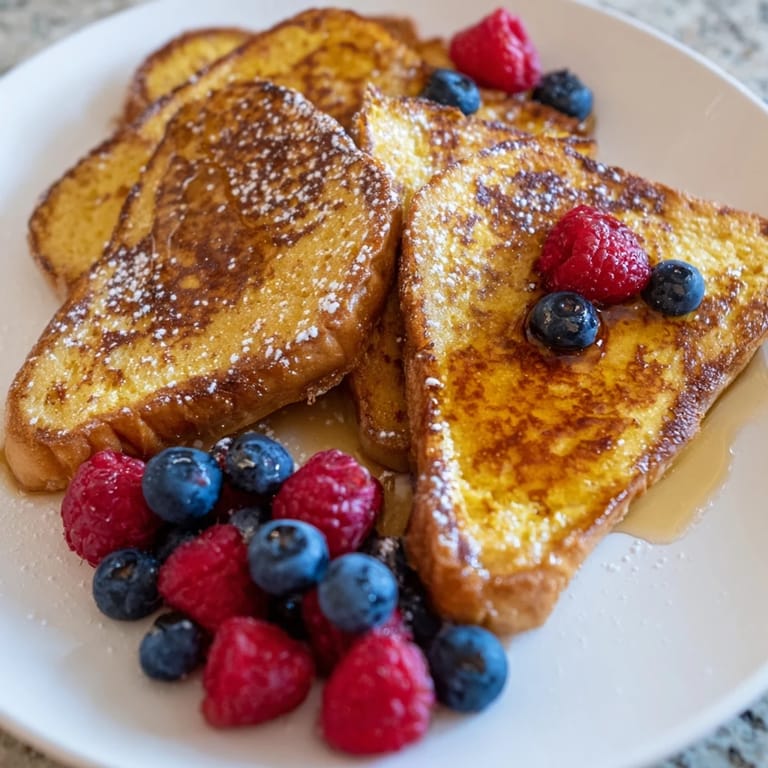
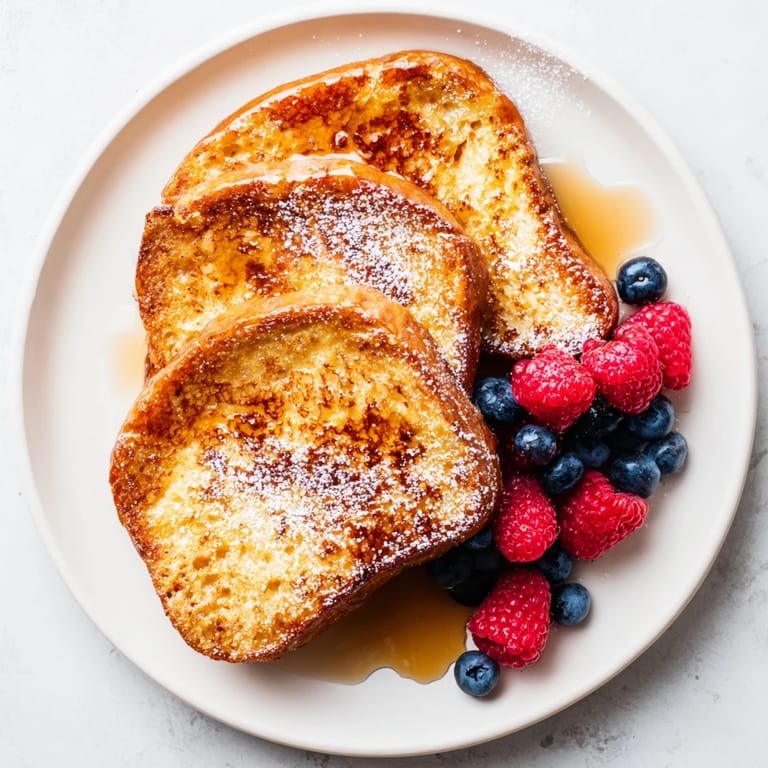
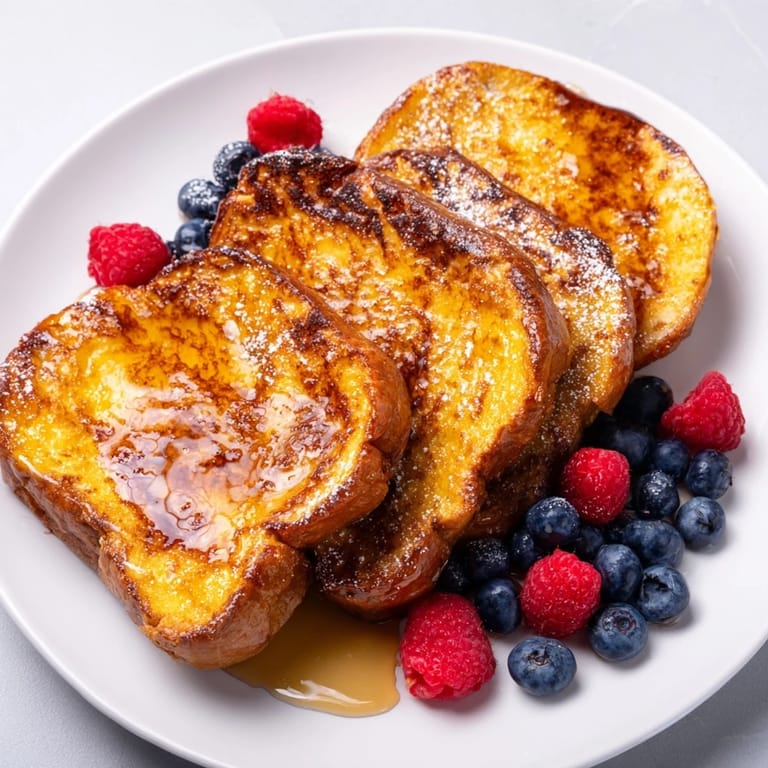
- Top warm slices with maple syrup, a light dusting of powdered sugar, and fresh berries if you have them. Serve immediately while the custard inside is still slightly soft.
 Save
Save There was this morning when my nephew asked me why French toast tasted like dessert for breakfast, and I realized that sometimes the best cooking isn't about following rules perfectly—it's about creating a moment where someone feels genuinely cared for. That question made me pay more attention to every batch I make now.
The Bread Matters More Than You Think
Not all bread is created equal, and this is where that lesson about day-old bread becomes important. I once tried making French toast with fresh, soft white bread from the bakery counter, and it dissolved into the custard like it was made of air. My friend who bakes told me that bread needs a day or two to develop a crust and structure that can hold up to soaking without collapsing. Since then, I've started planning French toast breakfasts a day ahead, buying the bread when I know I'll use it the next morning. It's a small detail that separates mediocre French toast from the kind that makes people actually sit down and enjoy breakfast.
Temperature and Timing Are Your Silent Teachers
The first time I made French toast for more than two people, I kept trying to cook multiple slices at once and ended up with some golden and some pale. I learned the hard way that you have to cook one or two slices at a time so the pan temperature stays consistent and each slice gets equal time on the heat. Medium heat is the sweet spot—it gives the custard time to cook through while the exterior gets that beautiful golden-brown crust. Too many variables packed into the skillet ruins the whole thing, but a more methodical approach means you're not stressed and each slice comes out perfectly.
Customizing Your Custard
Once you understand the basic custard formula, you can start playing with it. Orange zest adds brightness, a splash of liqueur deepens the flavor, and even a touch of nutmeg can make people wonder what secret ingredient you used. The beauty of French toast is that it's forgiving enough to handle small experiments but structured enough that you can't really go wrong. My personal favorite is adding a teaspoon of almond extract alongside the vanilla for something subtle but memorable.
- If you want to make it dairy-free, use plant-based milk and butter, and the result is nearly indistinguishable from the original.
- Thicker bread slices hold the custard better and create a more luxurious interior, so cut your bread about three-quarters of an inch thick.
- If you're cooking for a crowd, you can keep finished slices warm in a low oven while you finish the batch.
 Save
Save French toast is proof that simple ingredients and a little attention can create something that feels deeply nourishing, both in the kitchen and at the table. Once you master this, you'll find yourself making it not because you have to, but because you want to share that feeling with someone else.
Recipe FAQs
- → What type of bread works best for this dish?
Day-old brioche, challah, or thick white bread are ideal as they absorb the custard well without falling apart.
- → Can I make this dish dairy-free?
Yes, substitute plant-based milk and butter alternatives to create a dairy-free version.
- → How do I prevent the bread from becoming soggy?
Dip each bread slice briefly in the custard mixture. Soaking too long can cause sogginess.
- → What toppings complement this dish?
Maple syrup, powdered sugar, and fresh berries add sweetness and freshness to balance the rich flavors.
- → Can I enhance the flavor of the custard mixture?
Try adding orange zest or a splash of liqueur for added depth and aroma.