 Save
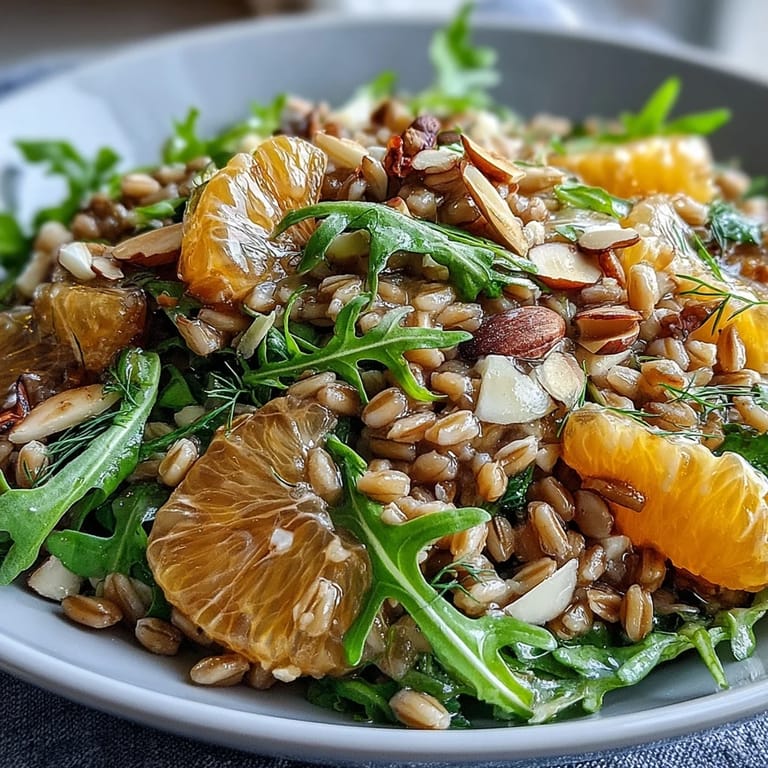
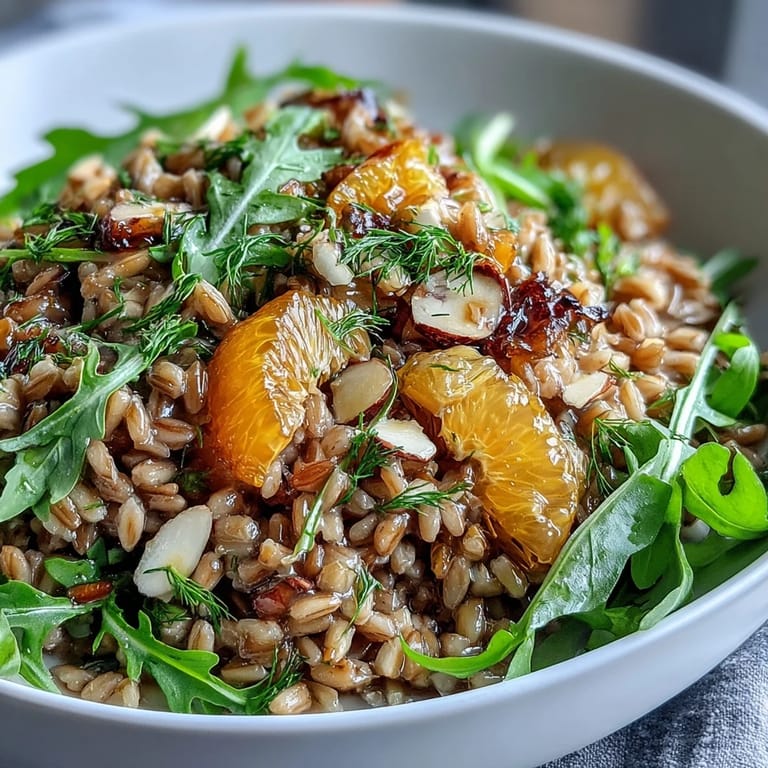
Save Last summer, I found myself standing in a farmers market with absolutely no dinner plan, just a vague craving for something bright and nourishing. My eyes landed on a bunch of fennel so pale and perfect it almost glowed, then oranges piled high nearby, and suddenly the whole meal crystallized in my mind. That afternoon taught me that farro—this ancient grain I'd mostly ignored—could anchor something this alive and fresh, transforming from a supporting player into the heart of the plate.
I made this for a potluck once where everyone else brought heavy casseroles, and this little bowl of color and crunch somehow became the thing people kept coming back to, piling it onto their plates alongside everything else. The citrus vinaigrette caught someone off guard—they expected something heavier—and that moment reminded me how food can quietly surprise people when you trust simple, quality ingredients.
Ingredients
- Uncooked whole grain farro (1 cup): This nutty grain has a satisfying chew that holds up beautifully to vinaigrette; rinsing it first removes excess starch and helps prevent mushiness.
- Water (3 cups): Use a 1:3 ratio for perfectly cooked farro that won't turn into paste.
- Kosher salt: Season the cooking water generously so the grain absorbs flavor from the start.
- Medium fennel bulb: The anise notes here are delicate when raw, almost sweet, balancing the citrus without overwhelming it; save those feathery fronds for a whisper of flavor on top.
- Large oranges (2): Segment them by hand rather than slicing crosswise so you get whole pieces that hold their juice; the fresher they are, the more alive the whole salad becomes.
- Arugula or baby spinach (2 cups): The peppery green here adds complexity and prevents the salad from feeling one-note.
- Fresh parsley (2 tablespoons, chopped): A grassy, gentle herb that ties everything together without stealing the show.
- Sliced almonds, toasted (1/2 cup): Toasting them yourself takes three minutes and completely changes their personality; they go from bland to deeply nutty and add a crucial textural contrast.
- Extra-virgin olive oil (3 tablespoons): Quality matters here since it's tasted directly, not cooked away.
- Freshly squeezed orange juice (1 tablespoon): Bottled juice loses that bright, fleeting quality you're reaching for.
- Freshly squeezed lemon juice (1 tablespoon): This adds the sharp note that prevents sweetness from taking over.
- Honey or maple syrup (1 teaspoon): Just enough to round the dressing without making it dessert.
- Dijon mustard (1 teaspoon): An emulsifier that helps the dressing cling to the grain and a whisper of sophistication.
- Sea salt and freshly ground black pepper: Taste as you go because seasoning is always the final word.
Tired of Takeout? 🥡
Get 10 meals you can make faster than delivery arrives. Seriously.
One email. No spam. Unsubscribe anytime.
Instructions
- Rinse and simmer the farro:
- Run the farro under cold water in a fine-mesh strainer, moving it around with your fingers until the water runs clear. In a medium saucepan, combine the rinsed farro, water, and salt, bring it to a rolling boil, then reduce the heat and cover it so the steam does the work.
- Let it cook gently:
- Set a timer for 25 to 30 minutes and resist the urge to peek too much; the farro is done when it's tender but still has a subtle bite, not soft throughout. Drain off any water that remains and spread it on a plate or shallow bowl to cool faster.
- Toast the almonds while you wait:
- In a dry skillet over medium heat, add the sliced almonds and listen for them to start whispering and crackling after about a minute. Stir them constantly for the next 1 to 2 minutes until they're golden and smell like a toasted almond cake, then immediately transfer them to a plate so they don't keep cooking.
- Build your base:
- Once the farro has cooled to room temperature, transfer it to a large bowl and add the thin-sliced fennel, orange segments you've carefully separated, the greens, and the parsley. Everything goes in raw and cool right now, waiting for the dressing to bring it all into harmony.
- Make the dressing:
- In a small bowl or a jar with a tight lid, whisk together the olive oil, fresh orange juice, fresh lemon juice, honey, mustard, salt, and pepper until the mixture looks unified and emulsified. If using a jar, screw the lid on tight and shake it like you mean it for about 30 seconds.
- Dress and finish:
- Pour the dressing over the salad and use two large spoons or salad tongs to toss everything together gently so the delicate greens and orange segments don't break apart. Right before serving, scatter the toasted almonds over the top and garnish with those reserved fennel fronds for a whisper of anise, then taste and adjust seasoning if needed.
 Save
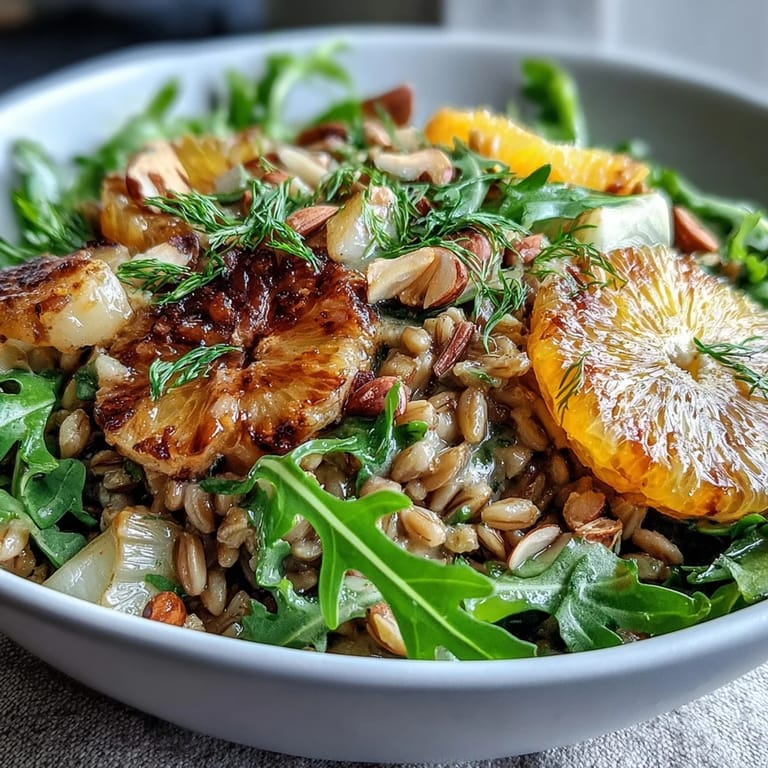
Save There's something about a salad this colorful that makes you feel virtuous just looking at it, but what gets me is how it actually tastes—bright, substantial, and nothing like the obligation salads I grew up eating. It's the kind of dish that proves grain-based salads don't have to be boring vehicles for whatever's in your pantry.
The Case for Whole Grains
Farro was a revelation for me because I'd spent years thinking grains were just filler, something to bulk up a meal without adding flavor. But this ancient wheat berry—technically a type of hulled wheat—brings an actual nutty depth that makes you forget you're eating something healthy. Once you taste how it holds a vinaigrette and stays chewy rather than mushy, it becomes your secret weapon for salads that actually satisfy.
Why Fennel Matters More Than You Think
Raw fennel is an acquired taste for some people, but slicing it paper-thin and letting it live alongside bright citrus tones down the anise edge and brings out a natural sweetness that's almost delicate. The texture matters too—that crisp snap against the chewy grain is part of what makes this salad feel interesting rather than monotonous. If fennel feels like too much of a risk, start with half a bulb and dial it up next time.
Variations and Ideas
The beauty of this salad is that it welcomes improvisation without losing its identity. Trade the oranges for blood oranges if they're in season and you want something deeper, or use grapefruit segments for a bolder citrus note that leans slightly bitter. Chickpeas stirred through at the end turn this into a proper meal, while grilled chicken breast makes it restaurant-worthy if you're feeding someone you're trying to impress.
- Swap the spinach for kale if you want something heartier that won't wilt, rubbing it gently with a bit of the vinaigrette first to soften it slightly.
- Try barley or quinoa in place of farro if gluten is a concern, adjusting cooking time according to package directions since they cook differently.
- A crisp Sauvignon Blanc or even a light rosé pairs beautifully with this and somehow makes the whole experience feel more like summer.
 Save
Save This salad taught me that simple, honest cooking is its own kind of satisfaction. Keep making it, and it becomes a ritual that tastes different each season depending on what the farmers market offers you.
Recipe FAQs
- → Can I make this ahead of time?
Yes, prepare the farro and dressing up to 2 days in advance. Store them separately in the refrigerator. Combine with fresh oranges, fennel, and greens just before serving to maintain crisp texture.
- → What's the best way to slice fennel?
Trim the fronds and stalks, cut the bulb in half lengthwise, and remove the tough core. Use a sharp knife or mandoline to create thin, even slices. The paper-thin pieces blend beautifully with the grain.
- → Can I substitute the farro?
Absolutely. Barley offers similar chewiness, while quinoa cooks faster and is naturally gluten-free. Brown rice or wheat berries also work well—just adjust cooking time accordingly.
- → How do I segment oranges properly?
Cut off the top and bottom of the orange, then slice away the peel and white pith following the curve. Hold the orange over a bowl and cut between the membranes to release perfect segments without any bitter pith.
- → What protein additions work well?
Grilled chicken breast, pan-seared shrimp, or chickpeas all complement the citrus flavors. Crumbled feta or goat cheese adds creamy richness, while poached salmon makes it a complete meal.