 Save
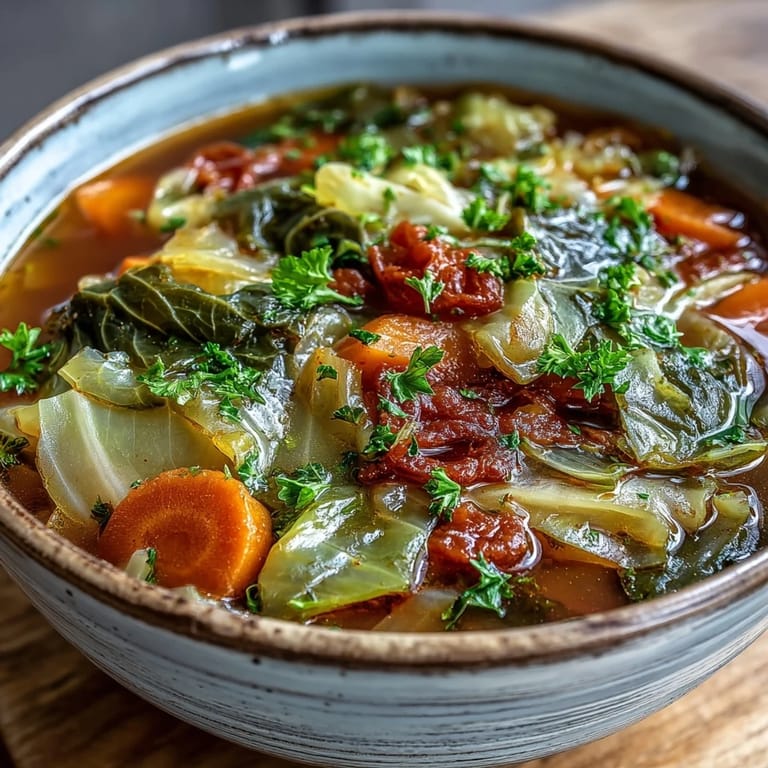
Save My neighbor brought me a head of cabbage from her garden one October afternoon, and I had no idea what to do with it. I stood in my kitchen that evening, the cabbage sitting on the counter like a green puzzle, until I remembered my grandmother once mentioning a simple soup she made when the weather turned cold. I chopped, simmered, and tasted my way through that first pot, and by the time I sat down with a bowl, I understood why she kept making it year after year. The smell alone made the whole house feel lived in.
I made this soup for a friend recovering from a cold, and she called me later that night just to say it was exactly what she needed. There was nothing fancy about it, just vegetables and warmth, but she said it felt like someone was taking care of her. I brought her another container two days later, and she admitted she had already finished the first batch. That is when I realized this recipe does more than fill you up.
Ingredients
- Green cabbage: The star of the pot, it softens into tender ribbons and releases a gentle sweetness that balances the tomatoes perfectly.
- Carrots and celery: They build the backbone of flavor and add a slight crunch even after simmering, giving the soup more texture than you would expect.
- Yellow onion: I always dice mine small so it melts into the broth and sweetens everything without being noticed.
- Garlic: Just two cloves are enough to add warmth without overpowering the delicate cabbage.
- Diced tomatoes with juice: The juice is just as important as the chunks, it thins the broth and adds acidity that keeps each spoonful bright.
- Tomato paste: I learned to cook this for a full minute before adding liquid, it deepens the color and takes away any tinny taste.
- Vegetable broth: Use a good one if you can, the soup is simple enough that a weak broth will show.
- Dried thyme and bay leaf: These quiet herbs do not shout, they just make everything taste more complete.
- Smoked paprika: This is optional but it adds a faint campfire note that makes people ask what your secret is.
- Fresh parsley: A handful at the end wakes up the whole bowl and makes it look like you tried harder than you did.
Tired of Takeout? 🥡
Get 10 meals you can make faster than delivery arrives. Seriously.
One email. No spam. Unsubscribe anytime.
Instructions
- Start with the aromatics:
- Heat your pot over medium flame and add a little oil, then toss in the onion, carrot, and celery. Let them cook for about five minutes, stirring now and then, until the onion turns translucent and the kitchen starts to smell inviting.
- Add the garlic:
- Stir in the minced garlic and let it cook for just one minute. You will know it is ready when the smell hits you and makes you lean over the pot.
- Wilt the cabbage:
- Add all that chopped cabbage and stir it around for three or four minutes. It will look like too much at first, but it shrinks fast and starts to soften at the edges.
- Cook the tomato paste:
- Mix in the tomato paste and let it cook for a full minute, stirring so it coats the vegetables. This step makes the whole soup taste richer and less sharp.
- Build the broth:
- Pour in the diced tomatoes with their juice, the vegetable broth, thyme, bay leaf, smoked paprika if you are using it, and a few pinches of salt and pepper. Stir everything together until it looks like soup and not just vegetables floating in liquid.
- Simmer until tender:
- Bring the pot to a boil, then turn the heat down low, cover it, and let it simmer for twenty five to thirty minutes. The cabbage should be completely tender and the broth should taste like all the vegetables have become friends.
- Finish and adjust:
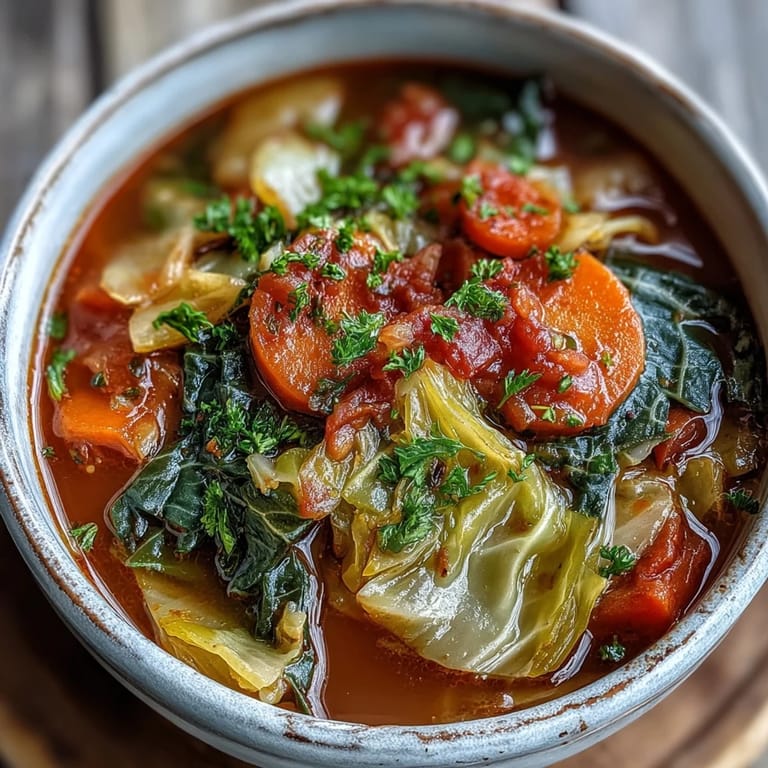
- Fish out the bay leaf and taste the soup, adding more salt or pepper if it needs it. Ladle it into bowls and scatter fresh parsley on top if you have it.
 Save
Save One winter evening I made this soup and served it with thick slices of rye bread, and my husband looked up from his bowl and said it tasted like something his grandmother would have made. He meant it as the highest compliment, and I understood exactly what he was trying to say. Sometimes a recipe does not need to be complicated to feel like home.
Making It Heartier
I have added diced potatoes and cooked white beans to this soup on nights when I needed it to be more filling, and both work beautifully. The potatoes should go in with the cabbage so they have time to cook through, and the beans can be stirred in during the last five minutes just to warm up. Either way, the soup stays light but becomes substantial enough to be the whole meal.
Storing and Reheating
This soup keeps well in the fridge for up to five days, and I have found it tastes better on day two when the flavors have had time to settle into each other. Reheat it gently on the stove over low heat, adding a splash of water or broth if it has thickened up. I do not recommend freezing it because the cabbage texture changes and becomes a little slimy when thawed.
Serving Suggestions
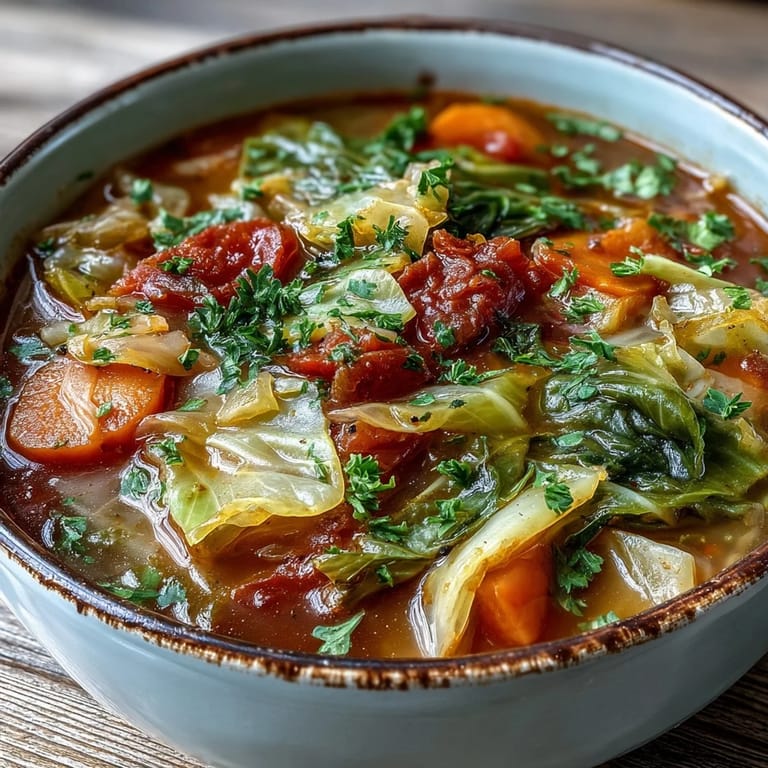
I love serving this soup with crusty bread or rye rolls, something with enough body to soak up the broth without falling apart. A simple green salad on the side makes it feel like a complete meal, and if you want to add richness, a dollop of sour cream on top works even though the recipe is dairy free as written.
- Serve it in wide shallow bowls so you can see all the vegetables and the broth does not cool too fast.
- Leftovers are perfect for lunch the next day, just reheat and pack in a thermos if you are taking it to work.
- If you are feeding kids, you can blend half the soup and stir it back in to make it creamier without changing the flavor.
 Save
Save This soup has become my go to on nights when I want something warm and easy, and it never disappoints. I hope it finds a place in your kitchen the way it has in mine.
Recipe FAQs
- → Can I make this cabbage soup ahead of time?
Yes, this soup stores beautifully in the refrigerator for up to 5 days. The flavors actually deepen and improve after a day. Reheat gently on the stovetop or in the microwave before serving.
- → What type of cabbage works best for this soup?
Green cabbage is traditional and recommended for its mild, sweet flavor and tender texture when cooked. You can also use savoy cabbage for a more delicate taste, though avoid red cabbage as it will change the soup's color.
- → How can I make this soup more filling?
Add diced potatoes during step 5 for extra heartiness, or stir in cooked white beans, chickpeas, or lentils near the end of cooking. You can also serve with crusty rye bread or rolls on the side.
- → Can I freeze leftover cabbage soup?
Absolutely! This soup freezes well for up to 3 months. Allow it to cool completely, then store in airtight containers or freezer bags. Thaw overnight in the refrigerator and reheat on the stovetop.
- → Is smoked paprika necessary for this soup?
Smoked paprika is optional but adds wonderful depth and a subtle smoky flavor. If you don't have it, use regular sweet paprika, or simply omit it—the soup will still be delicious with the other seasonings.
- → What can I substitute for vegetable broth?
You can use chicken broth for a non-vegetarian version, or make a simple broth by dissolving vegetable bouillon cubes in hot water. In a pinch, water with extra seasonings works, though the flavor will be milder.